• Skip to primary navigation
  • Skip to main content
  • Skip to primary sidebar
Notes From the Parsonage
  • About Us
    • Privacy Policy
  • Faith
    • Encouragement
    • Bible Reviews
    • Seasonal Devotionals
    • Topical Devotionals
  • Family
    • Kid Product Reviews
    • Mama
    • Crafts
  • Homeschool
    • Morning Basket
    • Bible Classes
  • Table
    • Kitchen Product Reviews
    • Recipes
      • Desserts
      • Large Family Meals

40 Holy People: A Lent Devotional for Families: Week Three

February 14, 2024 by notesfromtheparsonage 3 Comments

Stained Glass Swirl with Text 40 Holy People: A Lent Devotional for Families

This is the third week of our Lent Devotional for Families. We’re learning about holy people and opening our hearts to how God might make us holy, too. You can join from here, or you can go back to the beginning.

Stained Glass Swirl with Text 40 Holy People: A Lent Devotional for Families

Lent Day 11: Fanny Crosby — Using What I Have for God

Black and white image of Fanny Crosby wearing small glasses for the blind.

Fanny Crosby was born is 1820. Either she was blind from birth or she lost her sight shortly after.

At the age of eight, Fanny wrote her first poem. She was raised in a Christian home and by the age of fifteen had memorized the four Gospels, the Pentateuch, the book of Proverbs, the Song of Solomon, and many of the Psalms. She also learned to play the piano, organ, harp, and guitar.

In 1843, Fanny became the first woman to formally address the United States Senate. She advocated for the education of the blind.

Her first poem was published is 1841, and her first hymn was published in 1844. She continued to write hymns about her faith and country and poems about her convictions.

By the time she died in 1915, Fanny had written almost 9,000 hymns. Her goal was to win people to Christ through her songs. During the time of her hymn-writing, She lived in areas where she could help the poor and immigrants and was said to give away most of her money as soon as she got it. She kept only the money to pay for her basic necessities and gave away the rest to the poor around her.  Though she was blind, she used everything she had to point others to Jesus, whether in giving her money or time to help the poor or using her talents to write songs.

What do you do for God with what you have?

What could you do for others with what you have?

Activity: Listen to or sing one of Fanny’s hymns. (e.g., “All the Way My Savior Leads Me”, “Blessed Assurance”, “I Am Thine, O Lord”, “Jesus Is Tenderly Calling You Home”, “Near the Cross”, “Redeemed, How I Love to Proclaim It!”, “Rescue the Perishing”, “Take the World, but Give Me Jesus”, etc.)

“Blessed Assurance” sheet music — You can print this out for your kids to see what a hymn looks like in a hymnal. (Not all churches still have hymnals.)

Lent Day 12: John Wesley — Taking Jesus to the People

Portrait of John Wesley by George Romney. Painting of man with white hair and white collar.

Born in 1703, John Wesley was the fifteenth child (of nineteen). His mother, Susanna, taught the children to read, speak Latin and Greek, and memorize much of the New Testament. His mother was very devoted to helping her children develop a relationship with God.

In 1735, John and his brother Charles made the trip from their home in England to Savannah, Georgia. He spent a few years in Georgia as Savannah’s parish priest, gathered together many holy men and women, and grew the congregation.

Upon returning to England, Wesley began “taking church” to the people. He would preach in streets and where people were instead of waiting for them to come to church. John felt the need to go out and meet those who didn’t know God and introduce them. Traveling on horseback, he would preach two or three times a day. (To preach means to proclaim the Gospel, to tell people about Jesus.) Like Fanny, Wesley gave most of his money to the poor, keeping only what was necessary to meet his basic needs. He wrote books, peached sermons, met people where they were, and taught them about God and how to live a holy life.

Wesley died in 1791. His final words were, “Farewell, farewell. The best of all is, God with us.” He left 135,00 members and 541 preachers in the newly named “Methodist” churches.

“Do all the good you can. By all the means you can. In all the ways you can. In all the places you can. At all the times you can. To all the people you can. As long as ever you can.”

-John Wesley

Coloring Page

Lent Day 13: Helen Roseveare — Do Something for God

Picture of  Helen roseveare with child in her lap.

Helen Roseveare was born in England in 1925. As a child in Sunday School, she first felt she might be called to live on a foreign mission field. Her father thought highly of education, and Helen became a doctor. She still felt called to missions while in school and said, “I’ll go anywhere God wants me to, whatever the cost.”

After six and half years of medical school, six months in a missionary training center, and six months in Belgium studying French and tropical medicine, she went on a five-week trip to the Congo before she finally found herself where God was calling her. She was the only doctor for 2.5 million people. She began her work in a mud and thatch hospital while she built the building she needed and learned to speak Swahili. In eleven years, she had a 100-bed hospital and maternity complex and saved thousands of lives.

In 1964, Helen was taken as a prisoner of rebel forces in the area and endured beatings and torture. Once released, she returned to England to tell the people there that God’s grace had been sufficient during her time as a prisoner. She returned to the Congo in 1966 and continued her work helping the sick and injured until 1973. Helen is still alive today, writing books and encouraging people to be the hands of Jesus and do something for God.

“If I truly believe in Him, I’ll trust Him to desire for me that which is for my highest good and to have planned for its fulfillment.”

-Helen Roseveare

“It would seem that God had merely asked me to give Him my mind, my training, the ability that He has given me; to serve Him unquestioningly; and to leave with Him the consequences….How wonderful God is, and how foolish we are to argue with Him and not to trust Him wholly in every situation as we seek to serve Him!”

-Helen Roseveare

What do you think you could do for God now?

Use this map to color and find the Congo on the map.

Lent Day 14: Teresa of Avila — Visions of Castles

teresa of avila painting that looks like stained glass of woman in a habit infant of lilies and a dove

Teresa of Avila lived during the 1500s. (1515-1582, to be exact.) She lived in Spain and grew up in a family who converted to Christianity from Judaism. Teresa became a Carmelite nun early in adulthood. These nuns were devoted to prayer, though they were pretty lax about it when Teresa joined. Teresa worked to reform and strengthen her Cloister. (A cloister is a group of people living in a place of seclusion, much like a monastery.)

Teresa sought a deeper relationship with God through prayer and encouraged those around her to do the same. She had many visions during her quiet time with God. One of her visions was that of a castle. She described the spiritual life as walking through a castle, getting closer and closer to Christ who awaits us at the center.

“Let nothing disturb you.
Let nothing make you afraid.
All things are passing.
God alone never changes.
Patience gains all things.
If you have God you will want for nothing.
God alone suffices.”

-Teresa of Avila

“Christ has no body now but yours. No hands, no feet on earth but yours. Yours are the eyes through which he looks with compassion on this world. Yours are the feet with which he walks to do good. Yours are the hands through which he blesses all the world. Yours are the hands, yours are the feet, yours are the eyes– you are his body. Christ has no body now on earth but yours.”

-Teresa of Avila

Teresa of Avila is considered a Saint by many Christian Traditions. She devoted herself to prayer and to others finding a closer walk with God. Do you think you are devoted to prayer? Do you think you help others in their walk with God?

Coloring Page

Lent Day 15: Samuel Kaboo Morris — A Prince with a Mission

Black and white photo of Samuel morris in dark suit with white shirt

Samuel Kaboo was born in Liberia in 1873 as a prince among his tribe. When he was fourteen, he became a Christian; during that same year, he was captured by a neighboring tribe. He was beaten daily and was used as ransom to get his tribe to bring riches to his captors. One night, Kaboo saw a flash, and a voice told him to flee. His ropes fell off, he felt strong, and he ran off into the jungle, where he wandered for several days. He finally found a plantation and stayed there to work.

Samuel later felt called to America to learn more about God. He met a missionary who told him all she knew. He asked the missionary who taught her, and she gave him the name Stephen Merritt. Samuel walked to the shore and prayed that God would send a ship to take him to America. He eventually saw a trade ship and asked the captain to take him to America. The captain said, “No.” However, several of the workers on the ship ran away, so the captain asked Samuel to come on board to work. When he first boarded the ship, the other sailors abused him and made fun of Samuel, but by the time they reached America, they were all praying and singing hymns together.

In America, he found Stephen Merritt, who then asked Samuel to wait for him at his mission. When Mr. Merritt returned, he found that Samuel had begun a prayer meeting and had lead almost twenty men to Christ. He met many people and showed love and passion for Christ.

Samuel was used by God to draw many people to the Lord. While he attended school, many students came to pray with him. People from around the world would come to hear him speak. He inspired people to simply do something for God.

Samuel wanted to go back to Liberia and tell the people there about Jesus, but when he was twenty, he developed pneumonia. He prayed for God to heal him, but God told him that his work was done and that it was time to come home. Though other students encouraged him to pray and said that he needed to get better so that he could go back to Liberia and spread the Gospel, Samuel replied, “It is not my work… It is His. I have finished my job. He will send others better than I to do the work in Africa.”

After his death, many of his fellow students felt God calling them to go to Africa to be missionaries. Today, 85.6% of Liberians are Christian.

Do you pray for your neighbors? Your city? Your country?

Do you think God is calling you to share Him with your neighbors?

Use this map of Africa to color and find Liberia.

Lent Day 16: Perpetua — I Am a Christian!

Pixelated, cross-stitch image of Perpetua, a young girl with head tie and tunic with hands clasped in prayer

In 202 AD, Christianity was illegal. Perpetua was a Christian. Perpetua was arrested as she was preparing for Baptism. Her father, a nobleman, asked her to say she was not a Christian so she would not be put to death. She replied, “Could this vase of water be called any name other than what it is?” Her father said it could not. She replied, “Well, so too I cannot be called anything other than what I am– a Christian.”

At first, Perpetua was held under house-arrest. She was baptized in the house while under arrest. Then, she and her fellow Christians were then moved to a prison and locked in a dungeon. Eventually, she was moved to a better part of the prison where she could receive visitors. Perpetua was sentenced to death in an amphitheater. She told those with her, “You must all stand fast in the faith and love of one another, and do not be weakened by what we have gone through.”

Before her death, Perpetua asked God for a vision, showing if she would be condemned or freed. Perpetua received this vision from God: She saw a narrow ladder reaching to heaven, but only one person could climb up at a time. She saw a garden with a man dressed as a shepherd at the top of the ladder. Around the shepherd were thousands of people dressed in white. When the shepherd looked up and saw her, he said, “I am glad you have come my child.”

Perpetua and another young woman who was martyred with her, Felicitas, are recognized as Saints by many Christian traditions.

Coloring Page

Coloring Page 2

Click to see main 40 Holy People: A Lent Devotional for Families page.

Filed Under: Seasonal Devotionals Tagged With: devotional, faith, family, family devotional, family devotions, holy, inspiration, kid devotional

40 Holy People: A Lent Devotional for Families

February 14, 2024 by notesfromtheparsonage 9 Comments

Stained Glass Swirl with Text 40 Holy People: A Lent Devotional for Families

This Lent Devotional for Families  is centered around holy people… people that used their lives for others, people that inspire us to be more. Since there are 40 days in Lent (not counting Sundays), we’re looking at 40 Holy People. Some are Saints, some are missionaries, some are evangelists– all are examples of what we can do in Christ. I’m praying that the lives of these 40 individuals inspire my children (and honestly, myself) to get out of our comfort zones and do something for God, to deepen our faith, and to press us toward holiness.

Setting Aside Time

This devotional does take daily time, but it doesn’t take much time each day. Set aside a time when you are all together. You can do this in the evening after dinner. Or perhaps you can do it over breakfast to start the day off on the right foot. Meal times are great times for family devotions since everyone is seated together already. Carve out time for 40 days to lead your family well.

How To Do This Family Devotional

Each day during Lent (excluding Sunday), gather the whole family to read that day’s reading. These reading may have questions, which will lead to deeper discussions. Some have links to coloring pages if you want to print those and extend the discussion.

None of these contain Scripture. I’d highly recommend reading through one of the Gospels (take your pick) along with this family devotional. I’d recommend reading from the Gospel, reading the devotional reading, discussing, and then praying.

Let your kids be as involved as they are able. Let them read Scripture (even if it just one verse). Let them pray. The more interaction you have, the deeper the truth will sink into hearts and the stronger the bonds between you will be.

Click for Each Week

Week One

Week Two

Week Three

Week Four

Week Five

Week Six

Week Seven

Filed Under: Seasonal Devotionals Tagged With: children, Christian, faith, family devotional, family devotions, holiness, holy people, inspiration, kid devotional, Lent

40 Holy People: A Lent Devotional for Families: Week Seven

February 14, 2024 by notesfromtheparsonage 2 Comments

Stained Glass Swirl with Text 40 Holy People: A Lent Devotional for Families

This is the last week of our Lent Devotional for Families. We’re learning about holy people and opening our hearts to how God might make us holy, too. You can join from here, or you can go back to the beginning.

Stained Glass Swirl with Text 40 Holy People: A Lent Devotional for Families

Lent Day 35: Frances Ridley Havergal: All For Thee

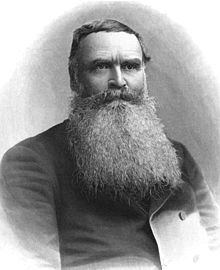
Black and white image of frances ridley havergal reading a book

Frances was born in 1836 in England. She was the youngest of six children. Her father was a minister, so Frances grew up in the Church. Her mother died when she was 14 and she went to live and study at a boarding school.

Frances wrote poetry. Being a musician, she also put her poems to music. She prayed that God would guide and anoint her writing. And He did.

Frances told God that she would do anything He asked. She was always ready to share the story of Jesus with anyone she met, even if it meant stopping what she was doing to talk to them. She even gave all her jewelry to help fund missions work.

On her deathbed, Frances praised God to be meeting Him so soon. She tried to sing one last hymn to the Lord as she took her final breaths.

Watch this video and see if you recognize Frances’ most popular hymn.

Lent Day 36: John Hyde: The Language of The Heart

Black and white painting of John Hyde

John Nelson Hyde was one of six children. His father was a minister in Carthage, Illinois. His father prayed that God would send laborers to the field (meaning people to go into the world and share Jesus). Three of the Hyde children were called into the ministry of God.

John heard God’s call on his life to go to the mission field. He talked about missions, prayed about missions, and encouraged other classmates to go to the mission field, as well. 26 of 46 of his graduating class ended up going to the mission field.

John felt God calling him to India. He served as a village missionary, traveling from village to village on foot or in a horse-drawn cart to share Jesus with the people. John spent much of that time living in a tent. In fact, he spent most of his time in India living in that tent.

john was very close to being deaf, so his sending group thought it might be best if he was not on the field. John agree to come home and turned in his resignation. The people in the villages heard that John was being pulled from the field and protested. Saying, “If he never speaks the language of our lips, he speaks the language of our hearts.”

For the first thirteen years he was in India, John saw very little results. He was robbed and threatened with violence by some. John continued to pray for India to know Christ and he continued to tell the people about Christ. He was known to pray for hours for the people he ministered to. His response to all difficulties and all problems was prayer. Though he saw little results for his prayers, He knew He would eventually see God’s harvest. He encouraged friends and family to pray for India. People all over the world starting praying with John that God would do something big in India.

In 1905, after more than a decade of work and prayer, John finally saw the answer to prayers he’d been looking for. Revival had broken out in India! (Revival is what we call it when many people turn to Jesus at once and the Holy Spirit moves people toward Christ.) For the next five years, John traveled all over India and people came to Jesus.

Two years later, John died. His dying words were, “Shout victory to Jesus!” (Only he said them in Punjab, a language used in India.)

Can you imagine God calling you to a foreign land and not even having a home to sleep in when you got there?

Could you pray for 12 years for something without seeing any answers to your prayer? Do you think that was difficult for John to do?

Coloring Page.

Lent Day 37: William Taylor: Reaching The World

Black and white picture of Bishop William Taylor

William Taylor was born to Methodist Ministers in Virginia in 1821. He was the oldest of eleven children. He followed in his father’s steps and became a circuit preacher at the age of 21.

In 1849, William felt called to California. The Gold Rush was just beginning, and William felt God leading him to the opposite coast of his birth. He built a chapel once he arrived in California and then built a house to live in. William became the pastor to unchurched multitudes from sailors to miners, most living very sinful lives. He saw many of these people come to find salvation in Jesus. Those people, then took Jesus to those around them.

After ministering in California for about 10 years, William traveled across the country preaching to people in Philadelphia and then Indiana.

Then, William went to Canada to preach the Gospel. In Canada, he heard that Australia was in need of Jesus.

So, on William went to Australia.

After three years of ministering in Australia, William went to South Africa. He traveled up the coast of Africa by ship, preached as they went along. In 7 months, he saw 8,000 people come to know Jesus as their Savior.

From Africa, William traveled to England, preaching the Word of God to the people there. William then went to Barbados, then British Guiana, then Scotland, then to the West Indies. He preached in St. Kitts, St. Vincent, Nevis, Trinidad, Tobago, St. Thomas, and Jamaica. Then, he went back to Australia, then to Tasmania and Ceylon.

In 1870, when he was almost 50, William went to India to preach about Jesus there and found churches. After starting revivals across India, William then went to South America, to take Jesus to the people there. At 63 years old, William went back to South Africa, which was the last place he took the word of God before his death. He set revivals ablaze in hearts on almost every continent of the world in his lifetime.

If one man could reach people in that many countries, how many people do you think could be reached by the whole Church?

Can you mark all the countries that William Taylor ministered in? (Map.)

Lent Day 38: Peter: The Rock

Bright Icon of Saint Peter holding a cross on a cane and three keys

Peter was an interesting guy. He seemed to always be the first to jump out there. Sometimes, this was good for him. Other times, well, Peter must have gotten used to the rebuking. But even through his mistakes, Peter was still the guy Jesus chose to carry on the Church when He was gone.

Matthew 16:13-20 (CEB) says:

Now when Jesus came to the area of Caesarea Philippi, he asked his disciples, “Who do people say the Human One is?”

They replied, “Some say John the Baptist, others Elijah, and still others Jeremiah or one of the other prophets.”

He said, “And what about you? Who do you say that I am?”

Simon Peter said, “You are the Christ, the Son of the living God.”

Then Jesus replied, “Happy are you, Simon son of Jonah, because no human has shown this to you. Rather my Father who is in heaven has shown you. I tell you that you are Peter. And I’ll build my church on this rock. The gates of the underworld won’t be able to stand against it. I’ll give you the keys of the kingdom of heaven. Anything you fasten on earth will be fastened in heaven. Anything you loosen on earth will be loosened in heaven.” Then he ordered the disciples not to tell anybody that he was the Christ.

Peter tells Jesus that he knows Jesus is the Son of God. Way to go, Peter! Jesus tells Peter he’s going to be the leader of the Church from there. And then what happens?

Matthew 16: 21-23 (CEB) says:

From that time Jesus began to show his disciples that he had to go to Jerusalem and suffer many things from the elders, chief priests, and legal experts, and that he had to be killed and raised on the third day. Then Peter took hold of Jesus and, scolding him, began to correct him: “God forbid, Lord! This won’t happen to you.” But he turned to Peter and said, “Get behind me, Satan. You are a stone that could make me stumble, for you are not thinking God’s thoughts but human thoughts.”

Whoa! We go from, “Dude, I’m choosing you to be the rock of my Church.” to “Get behind me Satan!” That is quite the turn around. And to Peter’s benefit, wouldn’t we all wish nothing but happiness and no pain for our friends? But that wasn’t what Jesus was trying to do. Being safe wouldn’t accomplish what the world needed. So while Peter wanted his friend and Lord to just be safe, Jesus knew the plan was different.

After this night, you have Peter putting his foot in his mouth again on the mountain with Jesus. Then you have the disciples being unable to cast the demons out of a little boy, and Jesus has to do the work for them, because they lacked faith. After this, Jesus has Peter go fishing to pay their taxes. Then we see Jesus teaching his disciples lessons about lost sheep, falling into sin, and forgiveness. And so on that last week goes until we get to the night Jesus is arrested.

In Matthew 26, Jesus tells Peter that he will betray Him three times. Of course, Peter says that won’t happen. Then he cuts off a guy’s ear who is trying to arrest Jesus, so you’re thinking, maybe Peter really won’t betray Jesus. But then we read Matthew 26: 69- 75 (CEB):

Meanwhile, Peter was sitting outside in the courtyard. A servant woman came and said to him, “You were also with Jesus the Galilean.”

But he denied it in front of all of them, saying, “I don’t know what you are talking about.”

When he went over to the gate, another woman saw him and said to those who were there, “This man was with Jesus, the man from Nazareth.”

With a solemn pledge, he denied it again, saying, “I don’t know the man.”

A short time later those standing there came and said to Peter, “You must be one of them. The way you talk gives you away.”

Then he cursed and swore, “I don’t know the man!” At that very moment the rooster crowed. Peter remembered Jesus’ words, “Before the rooster crows you will deny me three times.” And Peter went out and cried uncontrollably.

And we see that Jesus was right. Peter denied him. We don’t see Peter again until after Jesus’s death, when he is at the tomb and walked in to find that Jesus’s body was gone. And then Peter is all in. No more denying. No more running. From the empty tomb until his own upside down crucifixion. From the empty tomb, Peter was bold for Christ. He became that rock that the Church was built on. He walked on water. Those moments of denial did not define the legacy of Peter. They could have if he had let them. But he didn’t. He knew Jesus. Jesus’s death was just as much for Peter as for anyone. And Peter worked for the Church Jesus loved to the end.

Do you ever feel like you’ve done something so bad that there is no hope of being good?

Do you want to confess those things to Jesus so He can forgive you and make you a holy person?

Coloring Page.

Lent Day 39: Jesus: Our Salvation

While all of these other holy people may inspire us, only One can actually make us holy. Only one faced death on a cross to save all of us. Only Jesus can pay the price for our sin and make us right with God. Only through the Spirit in our lives can we become holy people.

Luke 22:39-46 (CEB)

Jesus left and made his way to the Mount of Olives, as was his custom, and the disciples followed him. When he arrived, he said to them, “Pray that you won’t give in to temptation.” He withdrew from them about a stone’s throw, knelt down, and prayed. He said, “Father, if it’s your will, take this cup of suffering away from me. However, not my will but your will must be done.” Then a heavenly angel appeared to him and strengthened him. He was in anguish and prayed even more earnestly. His sweat became like drops of blood falling on the ground. When he got up from praying, he went to the disciples. He found them asleep, overcome by grief. He said to them, “Why are you sleeping? Get up and pray so that you won’t give in to temptation.”

Luke 22:47-52 (CEB)

While Jesus was still speaking, a crowd appeared, and the one called Judas, one of the Twelve, was leading them. He approached Jesus to kiss him.

Jesus said to him, “Judas, would you betray the Human One with a kiss?”

When those around him recognized what was about to happen, they said, “Lord, should we fight with our swords?” One of them struck the high priest’s servant, cutting off his right ear.

Jesus responded, “Stop! No more of this!” He touched the slave’s ear and healed him.

Then Jesus said to the chief priests, the officers of the temple guard, and the elders who had come to get him, “Have you come with swords and clubs to arrest me, as though I were a thief? Day after day I was with you in the temple, but you didn’t arrest me. But this is your time, when darkness rules.”

Luke 22:63-71 (CEB)

The men who were holding Jesus in custody taunted him while they beat him. They blindfolded him and asked him repeatedly, “Prophesy! Who hit you?” Insulting him, they said many other horrible things against him.

As morning came, the elders of the people, both chief priests and legal experts, came together, and Jesus was brought before their council.

They said, “If you are the Christ, tell us!”

He answered, “If I tell you, you won’t believe. And if I ask you a question, you won’t answer. But from now on, the Human One will be seated on the right side of the power of God.”

They all said, “Are you God’s Son, then?”

He replied, “You say that I am.”

Then they said, “Why do we need further testimony? We’ve heard it from his own lips.”

Luke 23:1-49 (CEB)

The whole assembly got up and led Jesus to Pilate and began to accuse him. They said, “We have found this man misleading our people, opposing the payment of taxes to Caesar, and claiming that he is the Christ, a king.”

Pilate asked him, “Are you the king of the Jews?”

Jesus replied, “That’s what you say.”

Then Pilate said to the chief priests and the crowds, “I find no legal basis for action against this man.”

But they objected strenuously, saying, “He agitates the people with his teaching throughout Judea—starting from Galilee all the way here.”

Hearing this, Pilate asked if the man was a Galilean. When he learned that Jesus was from Herod’s district, Pilate sent him to Herod, who was also in Jerusalem at that time. Herod was very glad to see Jesus, for he had heard about Jesus and had wanted to see him for quite some time. He was hoping to see Jesus perform some sign. Herod questioned Jesus at length, but Jesus didn’t respond to him. The chief priests and the legal experts were there, fiercely accusing Jesus. Herod and his soldiers treated Jesus with contempt. Herod mocked him by dressing Jesus in elegant clothes and sent him back to Pilate. Pilate and Herod became friends with each other that day. Before this, they had been enemies.

Then Pilate called together the chief priests, the rulers, and the people. He said to them, “You brought this man before me as one who was misleading the people. I have questioned him in your presence and found nothing in this man’s conduct that provides a legal basis for the charges you have brought against him. Neither did Herod, because Herod returned him to us. He’s done nothing that deserves death. Therefore, I’ll have him whipped, then let him go.”

But with one voice they shouted, “Away with this man! Release Barabbas to us.” (Barabbas had been thrown into prison because of a riot that had occurred in the city, and for murder.)

Pilate addressed them again because he wanted to release Jesus.

They kept shouting out, “Crucify him! Crucify him!”

For the third time, Pilate said to them, “Why? What wrong has he done? I’ve found no legal basis for the death penalty in his case. Therefore, I will have him whipped, then let him go.”

But they were adamant, shouting their demand that Jesus be crucified. Their voices won out. Pilate issued his decision to grant their request. He released the one they asked for, who had been thrown into prison because of a riot and murder. But he handed Jesus over to their will.

As they led Jesus away, they grabbed Simon, a man from Cyrene, who was coming in from the countryside. They put the cross on his back and made him carry it behind Jesus. A huge crowd of people followed Jesus, including women, who were mourning and wailing for him. Jesus turned to the women and said, “Daughters of Jerusalem, don’t cry for me. Rather, cry for yourselves and your children. The time will come when they will say, ‘Happy are those who are unable to become pregnant, the wombs that never gave birth, and the breasts that never nursed a child.’ Then they will say to the mountains, ‘Fall on us,’ and to the hills, ‘Cover us.’ If they do these things when the tree is green, what will happen when it is dry?”

They also led two other criminals to be executed with Jesus. When they arrived at the place called The Skull, they crucified him, along with the criminals, one on his right and the other on his left. Jesus said, “Father, forgive them, for they don’t know what they’re doing.” They drew lots as a way of dividing up his clothing.

The people were standing around watching, but the leaders sneered at him, saying, “He saved others. Let him save himself if he really is the Christ sent from God, the chosen one.”

The soldiers also mocked him. They came up to him, offering him sour wine and saying, “If you really are the king of the Jews, save yourself.” Above his head was a notice of the formal charge against him. It read “This is the king of the Jews.”

One of the criminals hanging next to Jesus insulted him: “Aren’t you the Christ? Save yourself and us!”

Responding, the other criminal spoke harshly to him, “Don’t you fear God, seeing that you’ve also been sentenced to die? We are rightly condemned, for we are receiving the appropriate sentence for what we did. But this man has done nothing wrong.” Then he said, “Jesus, remember me when you come into your kingdom.”

Jesus replied, “I assure you that today you will be with me in paradise.”

It was now about noon, and darkness covered the whole earth until about three o’clock, while the sun stopped shining. Then the curtain in the sanctuary tore down the middle. Crying out in a loud voice, Jesus said, “Father, into your hands I entrust my life.” After he said this, he breathed for the last time.

When the centurion saw what happened, he praised God, saying, “It’s really true: this man was righteous.” All the crowds who had come together to see this event returned to their homes beating their chests after seeing what had happened. And everyone who knew him, including the women who had followed him from Galilee, stood at a distance observing these things.

Lent Day 40: You: Your Life in Christ

Picture of four small children given a thumbs up

So who will you be? What will you do for God? Will you love your neighbor? Will you help the sick? Will you feed the hungry? Will your life point to the cross? Will people see you and want to know Jesus? All of these holy people made the choice to follow Jesus. (Even Jesus made the choice to do the will of the Father.) Every Saint did what they could one thing at a time. What will you do?

Quote by CS Lewis in rainbow of colors on white background

Click to see main 40 Holy People: A Lent Devotional for Families page.

Filed Under: Seasonal Devotionals Tagged With: children, church, devotional, faith, family, family devotional, family devotions, holy, inspiration, kid devotional, Lent

40 Holy People: A Lent Devotional for Families: Week Two

February 14, 2024 by notesfromtheparsonage 3 Comments

Stained Glass Swirl with Text 40 Holy People: A Lent Devotional for Families

This is the second week of our Lent Devotional for Families. We’re learning about holy people and opening our hearts to how God might make us holy, too. You can join from here, or you can go back to the beginning.

Stained Glass Swirl with Text 40 Holy People: A Lent Devotional for Families

Lent Day 5: Polycarp — And the Fire Will Not Touch Him

Icon image of Polycarp with his thumb and ring finger touching.

Polycarp was a disciple of John, the disciple whom Jesus loved. He lived in the second century. That counts Polycarp among the first Christians. Polycarp was one of the three Apostolic Fathers. The Apostolic Fathers lived during the New Testament times and were the bridge between the Apostles, who wrote the New Testament, and those who came after.

During Polycarp’s life, there was much being said about Christ, but not all of it was true. Polycarp’s role was to keep the message of the Gospel true and not let others change it.

In his old age, it is said that Polycarp was burned at the stake for refusing to burn incense for the Roman Emperor. Polycarp said, “How then can I blaspheme my King and Saviour? Bring forth what thou wilt.” When the fire did not consume and kill Polycarp, he was stabbed. He is now regarded as a Saint in many Christian traditions. (A saint is a person who is recognized by the Church as someone who lived a very holy life. We also call those who die having faith in Jesus saints.) And we can thank Polycarp for keeping the story of the Gospel true and unchanged.

Coloring Page

Lent Day 6: Athanasius — Defender of the Trinity

Icon of Athanasius with ring finger hidden.

Athanasius was born around 296 AD. He was born into a Christian family in Egypt. As a child, Athanasius would baptize other children in the river outside of the church. When the Bishop of Alexandria saw, he declared that the baptisms done by Athanasius were genuine and invited the children to begin training for a clerical career. 

In his young adulthood, he was a secretary for the Council of Nicaea, from which we get the Nicene Creed. (A creed is a basic statement of faith.) What we know today about the Trinity– that God is three Persons– well, you can thank Athanasius for defending that truth in the early Church. He wrote great truths and preached them, as well.

Yes of the Nicene Creed in white on green background.

Athanasius was exiled five times, fleeing or being exiled by Emperors. After his fifth exile, he returned to Alexandria to resume writing and preaching, particularly about the Incarnation. (Incarnation is a big fancy word that means that Jesus was completely God and actually became a Man.) Quietly in his bed, Athanasius died in 373, surrounded by his clergy and faithful supporters. Athanasius is recognized by many Christian traditions as a saint, like Polycarp.

“Jesus, who I know as my Redeemer, cannot be less than God.”

-Athanasius at the Council of Nicaea (c. 325)

Map of Alexandria, Egypt

Coloring Page

Lent Day 7: Jim Elliot — My Life for Yours

Old photo of jim Elliot in striped sweater with tan bag strap worn cross body

Jim Elliot was a Christian missionary to the Auca people in Ecuador. A missionary is someone who goes to another culture to spread the Gospel of Christ. As a child, Jim grew up in church and had a heart for people who died without ever hearing about Jesus. He knew from a young age that God was calling him to the mission field.

Jim first went to Shandia, Ecuador, to minister to the Quichas. After three years with the Quicha people, Jim felt God calling him to share Jesus with the Aucas, even though he knew the Aucas killed outsiders and had killed many Quichuas. To win the trust of the Aucas, Jim and fellow missionaries began dropping supplies to the Aucan people, using a bucket to lower the supplies down. After months of supply drops, the Aucas sent a gift back up in the bucket of the plane. Jim felt it was time to meet the people face to face.

Jim and four other missionaries were flown in and dropped off on the Auca beach. After waiting of four days on the beach, an Auca man and two women appeared on the beach. The missionaries tried to show them friendship and asked them to bring the others with them. For two days, the missionaries waited for the Aucas to return. On the sixth day, the Aucas returned but did not appear friendly. They came with spears raised. Though Jim carried a gun, he chose not to use it. He knew the Aucas did not know Jesus and did not want them to die without knowing Christ. Jim and his friends– Ed McCully, Roger Youderian, Nate Saint, and Pete Flemming– were all killed by the Aucas.

When the men did not call, a plane was sent out looking for them. Eventually, the bodies of the missionaries were found. Though this sounds very sad, the story is not over.

In less than two years, Jim’s wife and daughter, Elisabeth and Valeria, were able to move with Rachel Saint (Nate Saint’s sister) into the Auca village. Many of the Aucas became Christians and they are now a friendly tribe with missionaries, including Nate Saint’s son and family still living there. Though Jim and the other four missionaries died, the Aucas were still able to hear about Jesus because of them.

“He is no fool who gives what he cannot keep to gain that which he cannot lose.”

-Jim Elliot

Map of South America

Color and decorate this typography. Hang it somewhere to remind you of the boldness and heart that puts others before yourself.

Lent Day 8: Anthony of Egypt — Running from Temptation

Icon image of Saint Anothony of Egypt with book and cane

Anthony of Egypt is known as the Father of All Monks. He was born around 251 AD. While not the first monk, he made it a habit of going out in the wilderness to be alone. Seeing the world full of snares and temptations, he ran to the wilderness to be closer to God. Most of what is known of Anthony was written in a biography by Athanasius. (Remember: we learned about him earlier this week.)

When Anthony was eighteen, his parents died. Shortly after this, Anthony decided to follow Jesus. He gave away and sold everything he had and donated the funds to help the poor. He followed the tradition of the hermit and went to live in the desert alone. (A hermit is a person who lives a simple life away from others for religious reasons.)

The devil still fought to tempt Anthony through boredom, laziness, and phantoms of women, yet he overcame temptation through prayer. (There are many paintings depicting the temptation of Saint Anthony.)  It is said that, after this, Anthony went to live in a tomb, where local people would bring him food. In the tomb, the devil beat him till Anthony became unconscious, but his friends from the village found him and brought him to a local church.

Anthony then moved further into the desert, where again, Satan resumed his war on Anthony sending phantoms in the form of wild beasts, wolves, lions, snakes, and scorpions. As the beasts would attack Anthony, he would laugh at them and say, “If any of you have any authority over me, only one would have been sufficient to fight me.” And the phantoms would disappear like smoke.

The Temptation fo Saint Anthony by Salvador Dali depicting a naked, thin man with a cross near a rock standing against deformed horses and elephants carrying art and buildings through the desert.

In 311, Anthony traveled to Alexandria and visited those imprisoned for the sake of Christ and comforted them. The Governor told Anthony not to come back to the city, but Anthony did not listen and came anyway. When the Governor did not kill Anthony, he returned to the desert.

But this time, disciples followed him to the desert to be taught by him. A monastery developed around him deep in the desert and Anthony taught his disciples, now fellow monks, to pray and work. At his death, he was buried in an unmarked, secret grave.

Anthony of Egypt is recognized as a Saint in many Christian traditions.

Saint Anthony ran to the desert to escape temptation (a strong urge or pressure to do wrong); how far would you go to escape temptation?

We see Anthony used prayer to overcome temptation; try praying for God to help you overcome temptations in your own life.

Coloring Page

Lent Day 9: The Cappadocian Fathers — God in Three Persons

Icon Image of Cappadocian Fathers gilded showing three men with hands raised at sides.

First, where is Cappadocia? Well, it was just south of the Black Sea, near modern-day Turkey. (See the map.)

Mao of cappadocia

Three men make up the Cappadocian Fathers. Basil the Great, Gregory of Nyssa, and Gregory of Nazianzus. They were all born sometime around 330 AD.  Basil and Gregory of Nyssa were brothers. Gregory of Nazianzus was their close friend. They helped finalize the 381 version of the Nicene Creed. (We read about the first version, from 325, when we talked about Athanasius.) They, too, were defenders of the Trinity– God in Three Persons.

In the early days after Jesus died and after all his disciples died, there were many wrong things being taught about the Gospel. People were trying to make Christ fit into the ideas they already had about religion and thought. They wanted to change Jesus to fit into what they already thought instead of letting Jesus change their minds. These early Church fathers were those who fought for the truth. We might think of them as people just sitting around thinking and writing, but they were actually working hard to preserve the truth of Jesus so that we could really know Him.

Back then, many people tried to say that Jesus was not God– that, sure, he was like God, but of course, he wasn’t really God. Some even said the Jesus wasn’t God at all– just a created man who God used. The Cappadocian Fathers insisted that people know the truth–that Jesus is fully God, that there is one God who is actually three Persons– Father, Son, and Spirit. They knew the truth, and they fought for it so that it would be passed down to you and me. Even now, their work actually helps us really know God.

Basil cared for the poor, and after his death, the poorhouse, hospital, and hospice of Ceasarea became the the lasting monuments of his life. Basil is considered a Saint by many Christian traditions.

Gregory of Nyssa is considered a Saint by many Christian traditions, though the year and cause of his death is unknown.

Gregory of Nazianzus is also considered a Saint. He died of old age in Arianzum, six years after retiring from his work in the church.

Image of text of Constanopolitan Creed in cream letters on green background with florals at edges.

Lent Day 10: Irenaeus — Standing for Truth

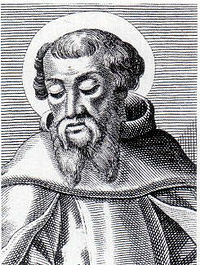
Print block of Saint Irenaeus in black and white

Iranaeus lived in the early 2nd century and is an early Church Father and Apologist. (An apologist is someone who defends or supports something that is criticized or attacked by other people. In this case, he defended the Gospel and the Church.) Irenaeus was a hearer (someone that listened) to Polycarp, about whom we read earlier this week.

Irenaeus’ main apologetic topic was against Gnosticism. ‘Gnosis’ means knowledge. Some people back then (and some people now) think the way to salvation is through intellectual knowledge (by learning more information than others). Irenaeus knew that the only way to salvation was through trusting what God did in and through His Son, Jesus. While the Gnostics say knowledge just comes to them through some secret teachings, Irenaeus used Scripture to defend his position– that salvation is available in Christ.

Just like many other Church Fathers, we remember and celebrate Irenaeus for his boldness to stand for truth. Thankfully, the truth of the Gospel was then passed down to you and me.

Nothing is known of Irenaeus’ death. Some say he was a martyr, that he died because of his faith in Christ. He was buried under the Church of Saint John in Lyons, which was renamed St. Irenaeus in his honor.

Standing for truth isn’t always easy. Sometimes it is hard to tell the truth or defend it. Have you ever found it tough to tell the truth? Have you ever had to defend the truth?

Coloring Page

Second Coloring Page

Click to see main 40 Holy People: A Lent Devotional for Families page.

Filed Under: Seasonal Devotionals Tagged With: Christian, church, devotional, family devotional, family devotions, holy, inspiration, kid devotional, Lent

Lenten Family Devotional Week One

February 14, 2024 by notesfromtheparsonage 1 Comment

This week, we’ll have the two days before Lent to prepare ourselves for the coming season. Technically, Lent won’t start until Day Three- Ash Wednesday. But I encourage you to go ahead and get started with the two Pre-Season devotions.


Needed Items for Activities—

– Day Two: party supplies (balloons, noise-makers, cake, party hats, etc.)

– Day Three: celery, peanut butter (or equivalent), raisins, honey

– Day Four: sturdy board (cardboard, poster board, etc.), blue paint, pasta, white glue (like basic school glue)

– Day Five: partially baked bakery bread OR look over the ingredients to make your own bread

Day One—Monday: Sacrifice

A common theme for Lent is sacrifice. We focus on denying ourselves, giving some comfort or happiness up for a season. After all, Christ gave himself for us; what would be too big to give in return for such sacrifice? In looking toward the “giving up” at Lent, there are a few things to keep in mind.

First, when we rid ourselves of the excess in life (and we in the West have plenty of excess), we find that we have more than we need. We realize how abundantly blessed we really are, and we realize that Christ is all we really need.

Jesus said to them, “I am the bread of life; whoever comes to me shall not hunger, and whoever believes in me shall not thirst.” —John 6:35 (ESV)

The second thing to keep in mind is not to draw attention to ourselves as we fast. We tend to put everything on social media and share everything. Fasting is best not done in such a way. It is one area of your life you can not put out there.

“And when you fast, do not look gloomy like the hypocrites, for they disfigure their faces that their fasting may be seen by others. Truly, I say to you, they have received their reward. But when you fast, anoint your head and wash you face, so that your fasting may not be seen by others but by your Father who is in secret. And your Father who sees in secret will reward you.” —Matthew 6:16-18 (ESV)

Share with those in your household. Share with your accountability partner if you have one. Those things are fine. But don’t point out to the world how miserable and deprived you are for the sake of the cross. We do keep a list on our fridge during Lent of everything each person is giving up. It helps us keep one another accountable. But that is for our family, our inner circle. That is not for the world or social media.

Last year, one of my kids gave up candy for Lent. Inevitably, the child was given candy. We instructed him to take it and say, “Thank you.” He then had the option of giving it to someone else or saving it for Sunday, the day we break fast.

During this season of self-denial, let us not forget why we deny ourselves. It isn’t to be thinner or better than anyone else.

“Not that I am speaking of being in need, for I have learned in whatever situation I am to be content. I know how to be brought low, and I know how to abound. In any and every circumstance, I have learned the secret of facing plenty and hunger, abundance and need. I can do all things through Him who strengthens me.” —Philippians 4:11-13 (ESV)


Discussion—

– What will you give up for the 40 days of Lent? Will it be a sacrifice on your part to do so?

Need ideas? Here are a few ideas of fasting for Lent:

• Soda

• Candy

• Sugar

• Caffeine

• Chocolate

• Meat

• Dairy (Chocolate milk is big in our house, so this would be a big sacrifice here.)

• Video games

• Social media (This one tends to be over-used and over-talked-about, but it might be a good fit for you.)

• TV (Also, DVRing all your shows for Sunday watching might be cheating. Think about it.)

• Hot water (It is certainly a luxury you can do without.)

• Eating out

• Make-up

• Convenience, packaged foods

• All drinks but water

• Electronic devices

• Shopping for fun (No long walks around Target, no purchasing anything but necessities…)

• Your favorite toys (For kids, this might be Legos, the trampoline, Hot Wheels, etc.)

Note what isn’t on this list. Things you shouldn’t be doing aren’t here. Why? Because you shouldn’t be doing them. Giving up fighting with your brother isn’t a sacrifice, that is something you should be working on outside of the Lenten season.

Also note, I can’t give up something I don’t currently do. I can’t give up meat, because I already don’t eat meat. So, that wouldn’t really be a sacrifice for me.

– Why would Jesus say to anoint yourself with oil and wash your face while you fast? (Parents, hint: Anointing with oil was the ancient equivalent of bathing.)

– What kind of reward could there be for fasting?

– Should we fast on Sundays through Lent? (Parents, hint: It is the day of the Resurrection. Luke 5:33-35 can also help your discussion.) Some people do fast on Sundays throughout Lent. What you decide will be up to you, but your whole family should decide before together and all stick to the plan.


Activity—

Decide what you will deny yourself this Lent. Even young children can participate. We all have something. (Parents, be prepared to help younger children succeed in their task.)


Day Two— Fat Tuesday: Devotion

Lent isn’t entirely about sacrifice. It is a time of refocusing our faith— getting back to basics, refining and resetting our priorities. It is a new beginning. That isn’t all negative. It isn’t all in the giving-up. Sometimes we need to add in some good things.

“All things are lawful,” but not all things are helpful. “All things are lawful,” but not all things build up. Let no one seek his own good, but the good of his neighbor… So, whatever you eat or drink, or whatever you do, do all to the glory of God. —1 Corinthians 10:23-24, 31 (ESV)

One thing I am already asking you to do is commit to doing devotions as a family throughout this Lenten season. That is already adding in some good, but there is more you could do as a family and as individuals.

You can commit yourself to doing more for your spiritual life. Read your Bible daily if you don’t already. Pray in the morning when you wake if you don’t already. Listen to uplifting Christian music on your way to work through this season, or turn the radio off entirely and spend the time in prayer. Read a good Christian book. Give the money you would have spent (on shopping or eating out) to a charity or your church. Commit to praying daily for a specific purpose: your church, a ministry, a missionary, families in your church, your community, your family, etc. You can find a million ways to add in the good along with your fasting during Lent.

Lent is a good time to forgive those who have wronged you. Look into yourself for any grudges you may be holding, and let them go. If you know you have wronged someone, go to them this Lenten season and apologize.

Commit your family to being part of your church body this Lent. I’d like to think you have this commitment all the time, but I am all too aware that isn’t the reality of the lives of most people. Weekly church attendance, participation in a small group, participation in the ministries of your church— all of these help you reorganize your priorities. If the priority in your family is anything other than Jesus, you need to tear it down and start again. Anything that keeps your family from Christ needs to go. Anything. It is the simplest, most difficult thing you will ever do, and it isn’t a task that is just done. We all need to make sure that this life isn’t getting in the way of The Life.

So we do not lose heart. Though our outer self is wasting away, our inner self is being renewed day by day. For this light momentary affliction is preparing for us an eternal weight of glory beyond all comparison, as we look not to the things that are seen but to the things that are unseen. For the things that are seen are transient, but the things that are unseen are eternal. —2 Corinthians 4:16-18


Discussion—

– Will we, as a family, commit to being together and doing this daily devotion through Lent?

– Will we, as a family, commit to attending church every week this Lent?

– What will you add in that is good in addition to the thing you are giving up this Lent?

– Is our focus, as a family, on Jesus? Is anything keeping us from Him?


Activity—

– Have a party to start this season! Bake a cake. Get balloons. This is going to be a good season for your family! Celebrate!


Day Three— Ash Wednesday: Preparing the Way

Read Matthew 3:1-12

OR

“John the Baptist” on p.154-155 in Jesus Calling Storybook

OR

“Heaven Breaks Through” on p.200-203 in The Jesus Storybook Bible


Discussion—

– What does ‘repent’ mean?

– How can we prepare ourselves this Lent?

– What relationship was John to Jesus?

– Why do you think they called him John the Baptist?


Activity—

– John the Baptist snacks: We’ll not go so far as eating locusts, unless you happen to have a store near you that sells such things and you are feeling brave. Instead, we’ll be making ants on a log with honey! Cut some celery into shorter sticks. Fill them with peanut butter or sunbutter, whichever your family happens to use. Take raisins and place them along the “log” in the peanut butter. Drizzle with a little honey. Enjoy. Now, this is far different than what John the Baptist would have really eaten, but we can pretend.


Day Four— Thursday: The Baptism of Jesus

Read Matthew 3:13-17

OR

“John the Baptist” on p.154-155 in Jesus Calling Bible Storybook

OR

“Heaven Breaks Through” on p.204-207 in The Jesus Storybook Bible


Discussion—

– What do you think ‘baptism’ means? (Parents, if you’re having trouble answering this yourself, ask you pastor.)

– Why do you think John was hesitant to baptize Jesus?

– Have you been baptized? Talk about your experience. Pull out photos you might have. If your kids were baptized as babies, describe their baptisms to them, and pull out pictures or their baptism outfits to show them.


Activity—

– Dove Comes Down art: Today, we’re exploring the wide world of dried pasta art! Grab your white glue and pasta of choice (or multiple kinds of pasta), and let’s get started. You’ll want a base that is sturdy, like cardboard, poster board, tag board, etc. Make that blue with paint, markers, or crayons. Now, glue the pasta into the shape of a descending dove. If you need to print a template, go for it. A descending dove is the perfect shape for making pasta art because it is pretty simple. If you normally toss artwork (like I do) try to keep their Lent art for all of Lent. Find some way to display it in your home during this season to remind your family of what you’re learning.


Day Five— Friday: The Temptation of Jesus

Read Luke 4:1-13

OR

“Let’s Go” on p.208-209 in The Jesus Storybook Bible


Discussion—

– Is temptation itself sin?

– Did you notice that in Jesus’ answers, he was quoting Old Testament Scripture?

– Do you think memorizing the word of God is a good way to avoid temptation?


Activity—

– Sneaky Snake Bread: This sneaky snake will appear again in our story. He was there in the garden, tempting the first people created to sin. He is here in this story, tempting Jesus to sin. And he’ll be hiding in the garden, hoping to see the Son of God reject the cross. The first temptation of Jesus, because he was hungry, was to turn a stone into bread. We’re making bread! If you find yourself short on time, get a partially baked baguette from the bakery. Cut slits in the bread on opposite sides and stuff the bread with whatever you want. (If you want a dessert style bread, stuff with cream cheese or mascarpone and berries. If you’d rather go for a savory loaf, try Mozzarella, basil, and tomatoes. If you want to make it for lunch, stuff it with deli meat and cheese.) Then bake it until it is brown. The alternating cuts can serve to “bend” the bread a little. You can also use olives and peppers to make eyes and a snaky tongue if you’re feeling up to it.

If you’re feeling more adventurous and want to bake your own bread from scratch, follow these directions:

8 cups white flour

1 T salt

½ oz. fresh yeast

5 T room-temp milk

1 and 2/3 cups cold water

Mix the yeast and warmish milk to activate the yeast. Wait a few minutes to give the yeast some time to adjust. Add the rest of the ingredients into the warm milk and yeast mixture. Once it is combined, turn out the dough onto a lightly floured surface and knead for 10-15 minutes. (This is enough time to give all your kids a chance to knead the dough.) Knead until it is smooth and elastic. Place in an oiled bowl and cover with oiled plastic wrap for about 2 hours to let it rise. It should double. Keeping it somewhere warm will help it rise well.

Turn out the dough onto a lightly floured surface, punch it down, and knead it for a minute. Cover it with a kitchen towel and let it rest for about 10 minutes. (These rest times are the magic moments for bread. Skip them, and your bread will be sad.)

Now, you’re going to use your dough to make a snake. Take some and make small stripes. Get as creative as you’re willing to get. Basically, use the dough like Play-Doh. If you’d rather let each kid make their own smaller snake, go with that. While the snake making is going down, preheat your over to 425*. Place the snake(s) on a large baking sheet.

If you want your snakes to be lovely, I would suggest an egg and milk wash. (Whisk one egg and 1 T of milk. Brush that onto the top of the bread before baking.) It’ll make it shiny and beautiful and super-impressive-looking.

Bake your snakes until they are golden brown. Serve them as a snack or with dinner. It is up to you how you consume your snakes.

– Listen to the song A Stick, A Carrot, and A String by mewithoutYou.


Day Six— Saturday: Jesus Calls His Disciples

Read John 1:35-51 and Mark 2:13-17

OR

“Twelve Helpers” on p.156-159 in Jesus Calling Bible Storybook

OR

“Let’s Go” on p. 210-213 in The Jesus Storybook Bible


Discussion—

– Have you ever thought about just how crazy this all was? A stranger is coming and asking a bunch of guys to follow Him around.

– Why do you think these twelve were the chosen ones?

– Why do you think the religious officials were surprised that Jesus was spending time with tax collectors and sinners?

– What does Jesus’ response tell us about who He is?


Activity—

– Follow the Leader: Take turns being Jesus. Jesus says, “Follow me!” Then we follow along the way He is going. If He jumps, we jump. If He crawls, we crawl.

Filed Under: Faith, Seasonal Devotionals, Uncategorized Tagged With: devotions with kids, family, family devotions, Lent, lent devotion, let activities, life of Jesus

40 Holy People: A Lent Devotional for Families: Week Four

February 14, 2024 by notesfromtheparsonage 2 Comments

Stained Glass Swirl with Text 40 Holy People: A Lent Devotional for Families

This is the fourth week of our Lent Devotional for Families. We’re learning about holy people and opening our hearts to how God might make us holy, too. You can join from here, or you can go back to the beginning.

Stained Glass Swirl with Text 40 Holy People: A Lent Devotional for Families

Lent Day 17: Ignatius of Antioch: Bearing  God

Small circular icon image of St. Ignatius_of_Antioch touching his ring finger to his thumb.

Ignatius was born around 35 AD (that is a very, very long time ago!). He was a student of John the beloved disciple. Ignatius is also known as an Apostolic Father. The Apostolic Fathers lived during the New Testament times and were the bridge between the Apostles, who wrote the New Testament, and those who came after. (Polycarp, who we talked about previously, was also an Apostolic Father.)

Igantius referred to himself as Theophorus, which means, “God Bearer”. It is said that Ignatius was one of the children that Jesus took into his arms and blessed. (You remember the story in Matthew 19:13-15. Children were brought before Jesus, that he would bless them. The disciples got angry and told the people to go away, thinking Jesus was too busy and important for something so trivial. But Jesus welcomed the children into his arms and told those listening to let the children come and not hinder them, for the kingdom of Heaven belonged to them.)

Like Paul, Ignatius traveled and spread the good news of the Gospel. He wrote letters to churches, like Paul, too. Even though it was illegal and dangerous, Ignatius taught people about Christ in every city he traveled through. This led to his arrest and execution in 110AD. After being sentenced to be fed to lions for telling people about Jesus, Ignatius wrote, “I am writing to all the Churches and I enjoin all, that I am dying willingly for God’s sake, if only you do not prevent it. I beg you, do not do me an untimely kindness. Allow me to be eaten by the beasts, which are my way of reaching to God. I am God’s wheat, and I am to be ground by the teeth of wild beasts, so that I may become the pure bread of Christ.”

Ignatius is regarded as a Saint by many Christian traditions.

Why do you think Ignatius was willing to be eaten by lions to tell people the Gospel?

Do you think it was easy for Ignatius to bear God?

Coloring Page.

Lent Day 18: Paul the Apostle: Making Things Right

Circular icon image of St.Paul, bust only

Paul’s name wasn’t always Paul, it was Saul. We read about his name change in the book of Acts, chapter 9.

Saul is actively persecuting (punishing them for their belief) Christians. While he was on his was to Damascus to capture more Christians, he is visiting by Jesus. (Who was dead and risen at this point in time.) Jesus came to Saul and asked why he was persecuting him. Saul asked who he was. Jesus said, “I am Jesus, whom you are persecuting.”

Jesus tells Saul to do exactly as he says. He sends Saul into the city to wait to be told what to do. The men traveling with Saul heard the voice, but didn’t see Jesus. Saul, who had fallen to the ground, as most people would when visited by a dead man, rose from the ground and found that he couldn’t see. He was blind. The men with him led him to Damascus. For three days, blind Saul didn’t eat or drink anything.

While all of this was going on, God gave a vision to a man in Damascus named Ananias. He told Ananias, who was a Christian, to go look for Saul. Once he found him, Ananias was to lay hands on Saul and pray for him that he might regain his sight. But Ananias knew who Saul was, that he was doing evil against Christians, and didn’t really want to go. But God told Ananias that He had chosen Saul to carry His name. So Ananias went.

He found Saul, told him God sent Him, and he laid his hand on Saul and prayed that Saul’s sight would return and that he would be filled with the Holy Spirit. Immediately, scales fell from Saul’s eyes and he could see again. He was immediately baptized.

Saul began proclaiming Jesus as the Son of God right away. But the people were pretty confused, since they knew Saul to be the one who hated Christians and sought to kill them. The Jews plotted to kill Saul, because he was telling people Jesus was the Son of God. Saul escaped with the help of Christians. Everywhere Saul went, he told people that Jesus was the Son of God. And everywhere he went, people were very confused because Saul had been killing Christians days before.

Saul becomes one of the first missionaries, sent out into the world to tell people about Jesus. Somewhere along the way, Saul becomes known as Paul, and he continues to tell people about Jesus. Eventually Paul is killed because of his faith in Jesus. (This is called martyrdom.)

Do you think you could have listened to God, like Ananias, and gone to pray for someone you knew hated you?

What would have happened if Ananias refused to do what God told him? (Ananias teaches us how important we are to one another. We have the power to change people’s lives for the better, if we just listen to God.)

Do you think it was hard for Saul to realize he was wrong and change his ways?

Why do you think Jesus called Saul? Why not pick someone nicer?

Coloring Page.

Maps of Paul’s Missionary Journeys.

Lent Day 19: Francis Asbury: Taking Jesus to The People

Round black and white portrait of Francis Asbury, bust only.

Francis Asbury was born in England in 1745. His mother wanted him to become an Archbishop of Canterbury, so she read him the Bible, sang him hymns, and prayed over him.

At the age of 18, Francis became a preacher for Methodist meetings. When he was 22, John Wesley appointed him as a traveling preacher. (You remember reading about Wesley last week.) In 1771, Francis traveled to America to preach the Gospel.

In 1776, the American War of Independence broke out, and Francis was the only Methodist minister to remain in America. He traveled the country on horseback or in a carriage, preaching Jesus to every settlement he came to. Like Wesley, Asbury preached everywhere, not just in a church on Sunday mornings. He parched in fields, town squares, tobacco houses, courthouses, anywhere people were.

The Methodist Church in American grew from 1,200 to 214,000 members with 700 ordained ministers. Francis Asbury ordained the first African American man in the United States, Richard Allen of Philadelphia. He died in 1816.

In those days, communication was much more difficult, so Francis Asbury traveled on horseback to tell people about Jesus. How can we communicate today to tell people about Jesus?

Colonial Map of America in 1776.

Coloring Page.

Lent Day 20: Macrina: Encouraging Others

Icon Image of macrina dressed in blue holding left hand open and facing outward

Macrina was the sister of Basil and Gregory, The Cappadocian Fathers we learned about 2 weeks ago. Macrina did not go the school and get the education her brother did. Basil went to great schools and learned many things, but wasn’t planning to use his education for God. Macrina told him that he had become vain (showing a very high opinion of himself) and should follow Christ. At first, Basil ignored her, thinking she was simply uneducated. But after the death of his brother, Naucratius, he went to Macrina and asked her to teach him the ways of a religious life.

Macrina was the religious guide and strength for her family after their father died. She became known as “the Teacher”, despite not having formal education. She also encouraged her brother Gregory, to follow Christ and do something for God. Though she didn’t do much in terms of church history  or worldwide significance herself, her encouragement of her brothers to follow Christ and stay the course paved the way for early Christianity. Macrina did create a monastic community for women, where they focused on serving others.

How can you encourage others to do something for God?

How can you encourage your brothers or sisters to keep faith in God?

Coloring Page.

Game Time: There is a little activity we like to do in our house. It is especially helpful on days that are full of bickering and arguing. We sit around the table and we say one nice thing about each person. So, we pick a person to go first, say Emery. Then we each go around the table and say something we really like about Emery. (Emery is a good leader. Emery always lets others have a turn. Emery is the best tree climber in the family. Etc.) Each person gets a turn having the others say something nice about them. Try it. It is very encouraging. Mom and Dad always think you’re the bee’s knees, but it is extra special hearing that your siblings really like you, too. Make sure you include Mom and Dad! It’ll warm (or tickle) your heart to hear what your kids see in you.

Lent Day 21: Quintus Septimus Florens Tertullianus: Presenting God in My Language

Icon Image in gold of tertullian

Known as Tertullian, born in 160 AD, he was a Christian author from Carthage. (Carthage is now Tunisia, which is in the northern part of Africa. At the time of Tertullian, it was under Roman rule.) He was the first Christian to write Christian literature in Latin. He was also an early Christian  apologist (someone who writes or speaks to defend Christianity) and tried to stop heresy (heresy is thinking and spreading wrong teachings). Tertullian was also a defender of the Trinity, God is three person, one God. He is one of the early church fathers, paving the way for future Christians.

Why would it have been important that Tertullian wrote in Latin? Well, before that, the world was largely Greek speaking, but Latin use was rising, and continued to rise. (Many of our languages today are based largely on Latin.) Writing in Latin, meant more people could read and understand the teachings of Jesus and His Church.

Imagine if we didn’t have Christian writings in English today. You wouldn’t be sitting here listening to this being read and you wouldn’t understand as well as you do in your native language. Tertullian defended the Trinity and defended Christianity, which we have talked about how important those things are to use today.

Do you ever feel like you need to defend Jesus?

How do we know what is true about Jesus?

Coloring Page.

Coloring Page.

**Note- Print both of these coloring pages. The first is in Latin, the second is in English. This will help press the point that ideas are easily expressed in our own language, but more difficult in another language.**

Lent Day 22: Samuel: Listening To God

Painting of young Samuel coming to Elijah.

In 1 Samuel 3, we learn of God calling the boy Samuel, who was about 12 years old.

“Now the boy Samuel was serving the Lord under Eli. The Lord’s word was rare at that time, and visions weren’t widely known. One day Eli, whose eyes had grown so weak he was unable to see, was lying down in his room. God’s lamp hadn’t gone out yet, and Samuel was lying down in the Lord’s temple, where God’s chest was.

The Lord called to Samuel. “I’m here,” he said.

 Samuel hurried to Eli and said, “I’m here. You called me?”

“I didn’t call you,” Eli replied. “Go lie down.” So he did.

Again the Lord called Samuel, so Samuel got up, went to Eli, and said, “I’m here. You called me?”

“I didn’t call, my son,” Eli replied. “Go and lie down.”

( Now Samuel didn’t yet know the Lord, and the Lord’s word hadn’t yet been revealed to him.)

A third time the Lord called Samuel. He got up, went to Eli, and said, “I’m here. You called me?”

Then Eli realized that it was the Lord who was calling the boy. So Eli said to Samuel, “Go and lie down. If he calls you, say, ‘Speak, Lord. Your servant is listening.’” So Samuel went and lay down where he’d been.

Then the Lord came and stood there, calling just as before, “Samuel, Samuel!”

Samuel said, “Speak. Your servant is listening.”

The Lord said to Samuel, “I am about to do something in Israel that will make the ears of all who hear it tingle! On that day, I will bring to pass against Eli everything I said about his household—every last bit of it! I told him that I would punish his family forever because of the wrongdoing he knew about—how his sons were cursing God, but he wouldn’t stop them.  Because of that I swore about Eli’s household that his family’s wrongdoing will never be reconciled by sacrifice or by offering.”

 Samuel lay there until morning, then opened the doors of the Lord’s house. Samuel was afraid to tell the vision to Eli. But Eli called Samuel, saying: “Samuel, my son!”

“I’m here,” Samuel said.

“What did he say to you?” Eli asked. “Don’t hide anything from me. May God deal harshly with you and worse still if you hide from me a single word from everything he said to you.” So Samuel told him everything and hid nothing from him.

“He is the Lord, ” Eli said. “He will do as he pleases.”

So Samuel grew up, and the Lord was with him, not allowing any of his words to fail. All Israel from Dan to Beer-sheba knew that Samuel was trustworthy as the Lord’s prophet. The Lord continued to appear at Shiloh because the Lord revealed himself to Samuel at Shiloh through the Lord’s own word.”

The Lord spoke to Samuel, who was just a kid, and told him He was going to do something big in the nation of Israel. This revealing on God’s part made Samuel a prophet. A prophet is someone God used to tell the people messages from God. God continued to use Samuel to send messages to His people. Israel needed Samuel. They needed him to listen to God so they would know what the Lord was saying.

Do you ever hear God call your name? I’m not necessarily talking about in an audible way, but in your heart.

Do you stop and listen when you feel God calling you? Do you stop and listen to see if God is calling you?

Coloring Page.

Game: Practice Listening! Everyone closes their eyes. One person is chosen to speak (or make a sound). The person then whispers or makes their noise. Everyone has to repeat what they think they heard. If you want to make it more difficult, turn on the TV and see if anyone can hear over the noise. Have the kids do jumping jacks while they close their eyes and see if they can hear over their movement. Listening works best when we can get rid of all distractions and just listen.

Click to see main 40 Holy People: A Lent Devotional for Families page.

Filed Under: Seasonal Devotionals Tagged With: children, Christian, devotional, faith, family, family devotional, family devotions, inspiration, kid devotional, kids

Lenten Devotional Week Four

February 14, 2024 by notesfromtheparsonage 1 Comment

This week you will need: 
Day Nineteen: Art supplies

Day Twenty: Foot washing supplies OR bubble bath supplies

Day Twenty-one: clear bottle or jar with lid, vegetable oil, food coloring, glitter(optional)

Day Twenty-two: pink square paper (for origami)

Day Twenty-three: fish & bread for dinner, construction paper, glue, and glitter

Day Twenty-four: blue Jello cups or mix, whip cream, teddy grahams


Day Nineteen: Monday: Boy Alive!

Read Luke 7:11-17

Discussion:

– What significance would it have been to the widow if her son had not been raised? Think about the culture at the time. Who would she have had to care for her?

– Would you have been afraid to see someone sit up out of a coffin?

Activity:

– Paint a picture of the story. Add this to your Lenten artwork.

Day Twenty: Tuesday: Alabaster Box

Read Luke 7:36-50

OR

Washed With Tears, p.280-285 in The Jesus Storybook Bible

Discussion:

– What did the story of the debtors have to do with the woman and the Pharisee?

– Was there significance in the act of washing Jesus’s feet?

– Who can forgive sins?

Activity:

– Foot Washin’! Gather your supplies. If you have one of those pedicure tubs, pull it out! Or just grab a basin and some water. Grab some oils, lotions, whatever you have. Spare no expense. Wash the feet of those in your family. You can either do all of them. Mom and Dad can wash all feet together. Or you can all take turns.

– Alternatively: Make a luxurious bubble bath for each member of the family. Go overboard on bubbles, lotions, and fabulous bath goodness. The goal is to make everyone feel loved through pampering.

Day Tweny-One: Wednesday: Calming A Storm

Read Mark 4:35-41

OR

The Captain of The Storm, p.236- 243 in The Jesus Storybook Bible

OR

Jesus Works Miracles: The Storm, p.178-179 in Jesus Calling Storybook Bible

Discussion:

– Have you ever said to God, “Do you not even care that I am perishing?”

– Do you find that faith calms your fears?

– Have you ever felt the awe the disciples felt in your walk with Jesus? That “who is this that the wind and sea obey him” kind of feeling?

Activities:

– Storm in A Bottle: You’ll need a clear bottler jar, water, vegetable oil, food coloring (blue is the most “sea” like, but you could do any color), glitter is optional.

Fill your water or jar half way with oil. Drop in a few drops of food coloring. Add glitter if you are adding it. Fill the rest of the way with water. Add lid. Shake it around to mix the water and food coloring. Now, you can make a storm in the bottle! Rock it back and forth to make waves. Spin it in circles to make whirlwinds.

Day Twenty-Two: Thursday: Demons Into Pigs

Read Matthew 8:28-34

Discussion:

– Do you find it interesting that the demons recognized Jesus as the Son of God?

– We see demon possession in the Bible, yet we don’t hear much about it today. Do you think this is still something that happens? Does this give a new real ness to the term “spiritual warfare”?

– Jesus did something good for these men. Why do the people in the city beg Jesus to leave?

Activity:

– Make an Origami Pig! Origami is paper folding. It may take some practice to get the shapes right, but I am sure you’ll get it with practice.


Day Twenty-Three: Friday: Jesus Feeds 5,000

Read Matthew 14:13-21

OR

Jesus Works Miracles: The Fishes & The Loaves, p.180-181 in Jesus Calling Bible Storybook

OR

Filled Full!, p.244-249 in The Jesus Storybook Bible

Discussion:

– Do you think Jesus was tempted to be mad that all these people were following Him when He was trying to be alone?

– How many people would you guess were really there?

– What do you think they did with the leftovers?

– Do you think anyone in the crowd said, “No thanks. I’m on a low carb, mercury free diet?”

Activity:

– What’s for Dinner? Fish & Bread! Yep. Put that one the menu for dinner tonight. See what they think.

– Fish and Loaves Craft: You will need construction paper, glue, and glitter. Each person will need to cut out 5 loaves of bread from brown construction paper. With another color construction paper, you’ll cut out two fish. Use the glue to draw some lovely scales on the fish. Sprinkle with glitter. Glue all to a backdrop piece of construction paper. Add to Lenten artwork!

Day Twenty-Four: Saturday: Walking on Water

Read Matthew 14: 22-33

OR

Jesus Works Miracles: Jesus Walks on Water p.182-183 in Jesus Calling Bible Storybook

Discussion:

– The disciples had seen many miracles, why would they think “ghost” before “Jesus”?

– Discuss the boldness of Peter to even think to step out of the boat.

– Why did none of the other disciples try to walk on water?

– Do you ever feel like you are sinking and need to focus your eyes back on Jesus?

Activity:

– Walking on Water Snack: You’ll need blue jello, whip cream (or cool whip), and teddy Grahams (or Annie Bunny, whatever you use in your house). Make everyone a cup of blue Jello. Let it sit. Before you serve, add whip cream to the top, prop up two teddy grahams on the top of the whip cream! Enjoy.

Filed Under: Faith, Seasonal Devotionals, Uncategorized Tagged With: devotions, devotions with kids, faith, family, family devotion, inspirational, kids, Lent, lenten devotions, life of Jesus, parenting

Lenten Family Devotion Week Three

February 14, 2024 by notesfromtheparsonage 1 Comment

This week you will need: 
Day Fourteen: ingredients for Dole Whip

Day Fifteen: Copies of the coloring page + colored pencils, crayons, markers, or watercolor paints

Day Sixteen: Flashlight

Day Seventeen: Coke, Mentos

Day Eighteen: Copies of the coloring page + coloring supplies


Day Thirteen: Monday: Love Your Enemies

Read Luke 6:27-36

OR

Jesus The Teacher, p.164-165 in Jesus Calling Bible Storybook

Discussion:

– Does Jesus’s command sound foolish to you?

– What would happen if Christians embraced the foolishness of the Gospel?

– Do you need to work on showing love to those you disagree with? With those who despise you? With those who curse you? With those who wish to see you fail? With those with different political opinions than you?

Activity:

– Role Playing: Sometimes it is helpful to work out scenarios and what we should do so when we encounter something similar, we know better how to respond. Keeping the words of Jesus in mind, how should the following scenarios play out?

• Your friend comes to visit. When they leave, you notice your new video game is missing. What should you do?

• A kid is talking bad about you on the playground. What should you do?

• Your brother takes your toy without asking and breaks it. What should you do?

• Your Facebook friend comments on your post about politics and calls you names. What should you do?

Make up other scenarios to fit your family and your child. Help talk them through the scenarios and what Jesus would have us do.

Day Fourteen: Tuesday: Jesus Cleanses The Temple

Read John 2:13-22

Discussion:

– Why was Jesus upset to find people selling animals and changing money in the temple?

– This passage is a fulfillment of prophesy. Why would that be important for the Jewish people? Why would it be important to us?

– Do we see people doing something similar in a modern context?

– Does Jesus sound a little bit crazy here?

– Did the passage of time make more sense out of his words?

Activity:

– Make a Whip! While my initial thought was to make an actual Indiana Jones style whip, with my crazy boys, I thought better of it. Less whelps on them all to explain later. However, there is a Pin on Pinterest for making a Paracord whip if you are feeling adventurous. We’re making Dole Whips. Because I’m a weanie. And I like food.

You’ll need 5 oz. almond milk, 5 oz. coconut milk, ½ cup pineapple juice, 2 ½ cups frozen pineapple chunks, sweetener of choice (honey for us). Blend it all in your blender. Enjoy! If you made paracord whips instead, Run!

Day Fifteen: Wednesday: Nicodemas

Read John 3:1-15

Discussion:

– Why was Nicodemas confused about being born again?

– Do you think those outside of our faith find this confusing, as well?

– How do physical things we do in our lives and church mirror eternal truths?

Activity:

– Jesus & Nicodemas Coloring Page (Remember to display the finished art with the rest of your Lenten artwork!)


Day Sixteen: Thursday: God Loves Us

Read John 3:16-21

Discussion:

– Have you ever memorized John 3:16? Have you ever looked closely at the verse that follow?

– Why would wicked people not want the light?

– Do you think it is important to let people into our lives to see what our lives really look like?

– What would you say living in the light looks like?

Activity:

– Listen to the song “Oh How He Loves Us”.

– Find the Light hide and seek. You’ll need it to be relatively dark. You can play as a group if you have smaller children. Grab a flashlight. One person turns on the flashlight and hides. The others look for that person, using the light as a guide to find them. Alternatively, you can have a flashlight show in your living room. Turn off all the lights, grab some flashlights, turn on some music about God’s love for us, and let the lights dance across the ceiling.

Day Seventeen: Friday: The Woman At The Well

Read John 4:7-30

Discussion:

– What does Jesus talking to a Samaritan show us?

– What is this living water?

– Why did the woman think Jesus was a prophet?

Activity:

– Mentos & Coke: This one is going to be messy. Grab a coke, or a Sprite if you want the water look, drop in a mento, run. Laugh. Be sticky. The kids will love seeing the “living water”!

Day Eighteen: Saturday: The Centurion’s Servant

Read Luke 7:2-10

Discussion:

– What faith did the Centurion show?

– Did he also show humility?

– Do we have faith like this? That a word can make us well? Heal our hurt? Our brokenness? Our problems?

Activity:

– Centurion Soldier Coloring Page (make sure you hang this finished work up with the rest of the Lenten art!)

Filed Under: Faith, Seasonal Devotionals, Uncategorized Tagged With: devotions, devotions with kids, faith, family, family devotions, kids, Lent, lenten devotions

Lenten Family Devotion Week Two 

February 14, 2024 by notesfromtheparsonage 1 Comment

Needs This Week:  
Day Seven: blindfold, cups, three drinks

Day Twelve: black construction paper, white school glue, salt, watercolor paint and paintbrushes


Day Seven : Monday: Water To Wine

Read John 2:1-11

Discussion:  

– What do you think was going through the minds of the servants as the collected the water?

– Was the wine Jesus made good?

– Why do you think Jesus told his mother, “My time has not yet come.”?

Activity:

– Taste Test Time! Gather three liquids that you drink. Please don’t get anything gross. I mean, I guess if you have a household of preteen boys, sure, that might work. You’ll also need a blindfold! Each person takes turns blindfolded and tasting the three drinks and guessing what is in the cup. Could the guests have mistaken water for wine? If you want to make it easy for younger kids, choose drinks that are more different- water, juice, milk. If you want it to be more difficult, choose similar drinks- orange juice, mango juice, grapefruit juice or Pepsi, Coke, RC Cola or cow milk, almond milk, coconut milk. Parents- participate! It is fun for kids to watch parents play, too.

Day Eight: Tuesday: Jesus Heals a Leper

Read Luke 5:12-16

Discussion:  

– What is leprosy?

– In Hebrew culture, lepers were considered unclean. It was part of the ceremonial law that Jewish people could not touch lepers. It kept them from spreading disease. Yet, here, we seek Jesus reaching out his hand and touching the unclean. Discuss the significance of that act.

Activity:

– Let’s Put On a Play! Cast the rolls in the story. Jesus, Leper, Priest. Act out the story. With younger kids, you may need to narrate as they act.

Day Nine: Wednesday: Through The Roof

Read Luke 5:17-26

Discussion: 

– What do you think the paralytic man felt when Jesus said, “Your sins are forgiven.”?

– Why would that statement anger the church leaders?

– Which is easier, healing us of our bent nature or healing our bodies?

– Talk about the role of the paralytic man’s friends. Would the man have the ability to even get to Jesus without these people?

Activity:

– Story Time Yoga: We’re just going to move our bodies with the story. Participate or just read and instruct.

Start lying flat on your back, arms and legs extended. You’re a paralytic.

Your friends are lowering you down to Jesus. Reach both arms and legs straight up. Flail them around like you’re falling, if you wish.

You’re on the floor in front of Jesus. Lay flat on your back, arms and legs extended.

Put your hands in prayer position as you hope Jesus heals you.

Jesus says, “You’re sins are forgiven!” Touch your heart, clap your hands, shout “Yay!” But you’re still lying flat on your back.

Reach to the left with your arms as the church leaders ask “Who can forgive sins but God alone?” Reach all the way to the right with your arms as Jesus answers, “Which is easier to say? Your sins are forgiven or rise and walk?”

Return your hands to prayer position.

Jesus says to you, “Rise…” you stand up in your spot.

Lean down and touch your toes. “Take up your mat.”

Stand back up and step forward with one leg. “And walk!”

Jump up and down and glorify God!

Day Ten: Thursday: Healing on The Sabbath

Read Mark 3:1-6

Discussion:  

– Have you ever thought about the laws concerning the Sabbath and how we can honor them in a modern context?

– Why do you think none of the church leaders spoke up before Jesus healed the man?

– Why would the church leaders want to destroy Jesus?

Activity:

– Pharisee May I? Game: This is similar to Mother May I, but a little different. One person is the Pharisee. Everyone tries to get from the start line, to the finish line, where the Pharisee is. They ask a question, “Pharisee May I take 4 steps toward you?” If the Pharisee answers, no one moves. If the Pharisee says nothing, take the steps. If you forget to ask the Pharisee before moving, go back to the beginning. Encourage the Pharisee to sometimes answer and sometimes not answer.

Day Eleven: Friday: The Beatitudes

Read Matthew 5:2-12

OR

Jesus The Teacher p.160-161 in Jesus Calling Bible Storybook

Discussion:

– Have you ever heard the word paradox? (If not, you can explain it to them.)

– What other paradoxes do we find in Scripture?

– Does this make Christianity untrue?

– Which line from the Beatitudes spoke to you most?

Activity

– Word Art: Make word art for the word Blessed. You can write it in rocks outside. You can make the word from a pile of laundry. You can write it on a piece of paper. You can make the word out of Legos. Bonus: If you can combine paradox in the art, like writing “blessed” in a mess your kids made or making it out of dirty dishes.

Day Twelve: Saturday: Salt & Light

Read Matthew 5:13-16


Discussion:

– Why would salt be such an important concept in those days? (Hint: Lack of refrigeration)

– Are you a city on a hill in your community?

– Is showing your light the same as bragging about your good deeds?

Activity:

– Salt and Light Painting: You’ll need white school glue, black construction paper, salt, and watercolor paints. With the glue, make a simple drawing that represents light. It can be a lightbulb, a candle, a flame, a fire, a window, the sun- whatever light object of the child’s choice. Once you have your object drawn in glue (if you want, you can chalk draw it on the paper and then trace over it with the glue), sprinkle salt over the entire thing. Pour off excess salt. Wait a couple minutes for this to dry. Don’t want to paint in wet glue. Once it is dry, take watercolor paints. Wet your brush, mix your color, and simply touch the brush to the salt. The salt will soak up the color from the brush. Once your art is complete, allow it to dry and display it with your Lenten artwork.

Filed Under: Faith, Seasonal Devotionals, Uncategorized Tagged With: devotions, devotions with kids, faith, family, family devotions, kids, Lent, lent devotions

Lenten Family Devotional 2017 

February 14, 2024 by notesfromtheparsonage 1 Comment


Lent is coming! It sneaks up on me every year. This year, the focus of our study will be the ministry of Christ. If you’d rather, skip back to 40 Holy People and study that one if it fits your crew better. Or head on back to the Lenten Reading for Kids schedule if you’d prefer that one. If you’re new to my family devotionals, let me tell you how they work and give you some tips.

Lent is a 40-day season, not including Sundays. It is the season that stretches from Ash Wednesday (which is March 1st this year) to Easter Sunday. This year, I have two pre-Lent devotions and then 40 days of devotions for the Lenten season. These are intended to be done as a family. Everyone. All together. Now, I add some optional activities into my devotions. Use them. Don’t use them. You make this work for you and your family.

For Lent, you’ll have one reading each day except for Sunday. Use them as a springboard to talk to your kids about the life of Christ. I’ve also included some questions to get discussion going. Expect to get as much out of this as your kids get. This isn’t just for them; this is for your entire family. You may want to look ahead each week and see if there are any items you’ll need for activities that week. I will add a quick “need” list at the beginning of each week, but if you’re picking and choosing activities, you’ll need to adjust that to fit you.

Who reads? That is up to you. In our house, I am usually the devotional reader, and the Pastor usually handles a lot of the questions. Although, we do sometimes alternate kids reading. It really just depends on our particular time constraints and if the kids are acting particularly cooperative that season. It varies.

If you miss a day, skip it. Don’t try to pile a bunch into one day. Just skip it and move to the next. It’ll be okay. Really.

I write these for my family and then make them available to you. Adjust them as you need, and make them fit you. If you need something short and sweet, just do the readings. If you’ve got littles, use a storybook Bible to read the stories. Do the devotions in the evening, and then let them do the activities the following day. Whatever works for you is what will be best.

I’ve included the Scripture passages, but also added the applicable pages from The Jesus Storybook Bible and Jesus Calling Bible Storybook. If you have younger kids, you may choose to read from a Bible storybook instead of the Bible text when you can (All the readings aren’t found in both Storybooks.), or you may just want to look them up so that the kids can have illustrations to go with the story. If you have another Storybook you love, use it. I simply chose the two that are the most used in our house.

My prayer is that this Lenten devotion brings your family closer to one another and closer to God during this season. I hope you grow as a family in your walk with Jesus, and I sincerely hope this Lenten season is meaningful for you and your children.

Week One

Week Two

Week Three

Week Four

Week Five

Week Six

Week Seven

** This post contains affiliate links. **

Filed Under: Faith, Seasonal Devotionals Tagged With: devotion, devotions with kids, faith, family, family devotion, Lent, lent devotion, Lenten, Lenten Devotion, life of Jesus, parenting, storyboook Bibles

  • « Go to Previous Page
  • Page 1
  • Page 2
  • Page 3
  • Page 4
  • Page 5
  • Page 6
  • Interim pages omitted …
  • Page 12
  • Go to Next Page »

Primary Sidebar

Hello there!

black and white image of lady with long dark hair and glasses next to window with bamboo window shade

I’m Lindsey Jane, wife of a pastor and mama of 9 (yep, 9). Read along as I write about faith and family!  You can read more about our family and me here.

Try Audible Plus Today!

Listen to my recommended book this month with an Audible subscription today! (Use these links to support this website!)

Moment By Moment

Pinterest image of title of this blog, moment by moment, on blue background above an image of stained glass showing a pillar of cloud and fire

Let me set the scene, the Israelites (possibly numbering more than 2 million at this point in time) have been driven from Egypt after the ten plagues and they’ve entered the wilderness and have no idea where they are going. God knows the weakness of the people, so He is taking them the long way…

Read More

NLT Thinline Reference Bible Review

The Pastor decided he wanted to read the New Living Translation of the Bible this year. This is a “thought for thought” translation, which differs from the English Standard Version he usually reads, which is more “word for word”. I have accidentally created a Bible snob, so when he said he needed a physical copy…

Read More

Books I’m Reading in 2026

I’ve put together my reading list for 2026. I’m not going to share every single book, but you can always follow me on Goodreads if you want updates on all of it. I’m going to admit, I’ve chosen more books than I think I can read– but onward we go anyway! Non-Fiction Reading for 2026…

Read More

ESV Scripture Journal Review

Image of the large ESV Scripture Journal set with watercolor artwork by Ruth Chou Simons on a wooden mantle.

Crossway sent me this lovely ESV Scripture Journal to review. And yes, this is just ONE Bible. I’ve previously reviewed the Illuminated Scripture Journal, which is very similar to this Bible. This particular Bible is the set with art by Ruth Chou Simons. I love that Crossway partners with artists to make beautiful Bibles. The…

Read More

Copyright © 2026 Notes From the Parsonage on the Foodie Pro Theme