• Skip to primary navigation
  • Skip to main content
  • Skip to primary sidebar
Notes From the Parsonage
  • About Us
    • Privacy Policy
  • Faith
    • Encouragement
    • Bible Reviews
    • Seasonal Devotionals
    • Topical Devotionals
  • Family
    • Kid Product Reviews
    • Mama
    • Crafts
  • Homeschool
    • Morning Basket
    • Bible Classes
  • Table
    • Kitchen Product Reviews
    • Recipes
      • Desserts
      • Large Family Meals

Secular Is Not Neutral

August 10, 2024 by notesfromtheparsonage 6 Comments

Secular is Not Neutral with two kids playing in the dirt on the bottom of the Pinterest sized image.

Like many parents, I mistakingly had the idea that “secular” curriculum options were religiously neutral and I was wrong.

Secular Was Not A Solution to My Problem

When my children were young, I found myself in a homeschooling predicament. The problem was that we are Wesleyan-Arminian Christians, and most Christian homeschooling curriculum is not Wesleyan-Arminian. We haven’t been very good in our tradition with publishing, and we’re especially anemic when it comes to homeschooling resources.

I tried a few Reformed resources, but they didn’t perfectly fit our family. We tried Catholic resources and found that they, too, were not a perfect fit. In my frustration, I made a mistake that I think many homeschoolers might make in my shoes. I started opting for “secular” resources over “Christian” resources, thinking I was opting for a neutral option.

Secular Is Not Neutral

However, I was wrong. “Secular” is not neutral. Everyone has a worldview. No matter how “unbiased” we claim to be, we all have biases. We all have a lens through which we see the world, which is our worldview. In my frustration over comparatively-small theological differences among fellow Christians, I was opting to use resources from a completely different lens. It wasn’t neutral. And I knew it. I had to make more adjustments to make secular resources fit— but I felt like I was just laying my theology on top of a blank book— which couldn’t have been further from the truth.

The difference between the theological differences among Christian resources was more akin to having hazelnut creamer when I wanted caramel creamer. The difference in secular resources with the worldview I wanted to teach my children was more like trying to substitute motor oil for creamer. They were just completely different things. Why was I comfortable using the devil’s resources? Why was I okay with letting the world shape my children? I was wrong. Very wrong.

Does Theology Matter?

I’m not saying the theological differences don’t matter. There are reasons we’re Wesleyan-Arminian in tradition and not Reformed, Catholic, Charismatic, etc. Those are very valid reasons, and I do think the theology matters. But when it is all said and done, those are still my brothers and sisters in Christ. As long as we agree on the big issues of orthodoxy (basically what’s in the Creeds), we’re following the same Jesus. I should have trusted my kids to those resources over the secular ones. Would that have meant more conversations about points of theological differences? Sure. But those are worthwhile conversations to have. Who doesn’t need to be reminded of their baptism? Or to discuss personal holiness? And would I rather point my kids to Jesus in every way possible? I should have.

What is the Solution?

Do I wish there were more Wesleyan-Arminian resources? Yes. Let’s get on that. Please. But in the meantime, I’m okay with using resources that aren’t necessarily in our theological camp as long as they point to the real Jesus. Because what we choose to use in our homeschool shapes our children. (Education is shaping. Homeschool, private, or public schooling is a shaping activity for our children.) I should have been more mindful of the worldview I was allowing to shape my children. And from now on, I will be.

Other Notes from the Parsonage Posts You May Enjoy

  • Godbold Academy: Medieval History
  • Godbold Academy: Ancient History
  • 2017-2018 at Godbold Academy
  • 2016-2017 Homeschool Curriculum Review

Filed Under: Homeschool Tagged With: choosing curriculum, Christian, faith, family, homeschool, homeschool curriculum, parenting

Superhero Cape Sewing Tutorial

August 8, 2024 by notesfromtheparsonage 6 Comments

This superhero cape sewing tutorial is very easy. You’ll need two fat quarters and something to make the closure.

“Every boy needs to wear a cape at least once in his life.” – Uncle Brian

Two toddlers with superhero capes look sad and tired on a cracked driveway

Kids love superhero capes! Well, my kids do, anyway. It can be frustrating to try to locate a cape that is generic enough to fit any pretend game they want to play. If your child wants to be a bat or spider, then you’re all set. But let’s say they want to be “Super Aidan” or “Super Turtle” or “A Bad Apple”, then where do you find a costume like that? If you’re like me, you make it!

Toddler in an apple/pear superhero cape

Supplies for Superhero Cape Sewing Tutorial

First, you’ll need your supplies! You can make this out of 2 fat quarters. (You know how I adore things you can make with a fat quarter!) Essentially, you’ll need two rectangles measuring 18″ x 22″. (2 fat quarters)

If you want the cape a little longer for an older or taller child, you’ll want yardage. I recommend 22″ – 24″ long to fit from 2 to 5 years old. If your Super Little Guy is taller or older, you may want to adjust. [You’ll need 1/2 yard of 2 non-directional fabrics (this would make two capes). If one or both of your fabrics has a vertical pattern, you’ll need 2/3rds of a yard.

You will also need some sort of closure. You can use ribbon, buttons, snaps, velcro… It is up to you! I make mine with plastic snaps, since I have a snap press and like the ease of snaps. (Remember, if you use buttons, make sure the child is past that “putting everything in their mouth” stage. You don’t want them to choke.)

Measuring and Cutting

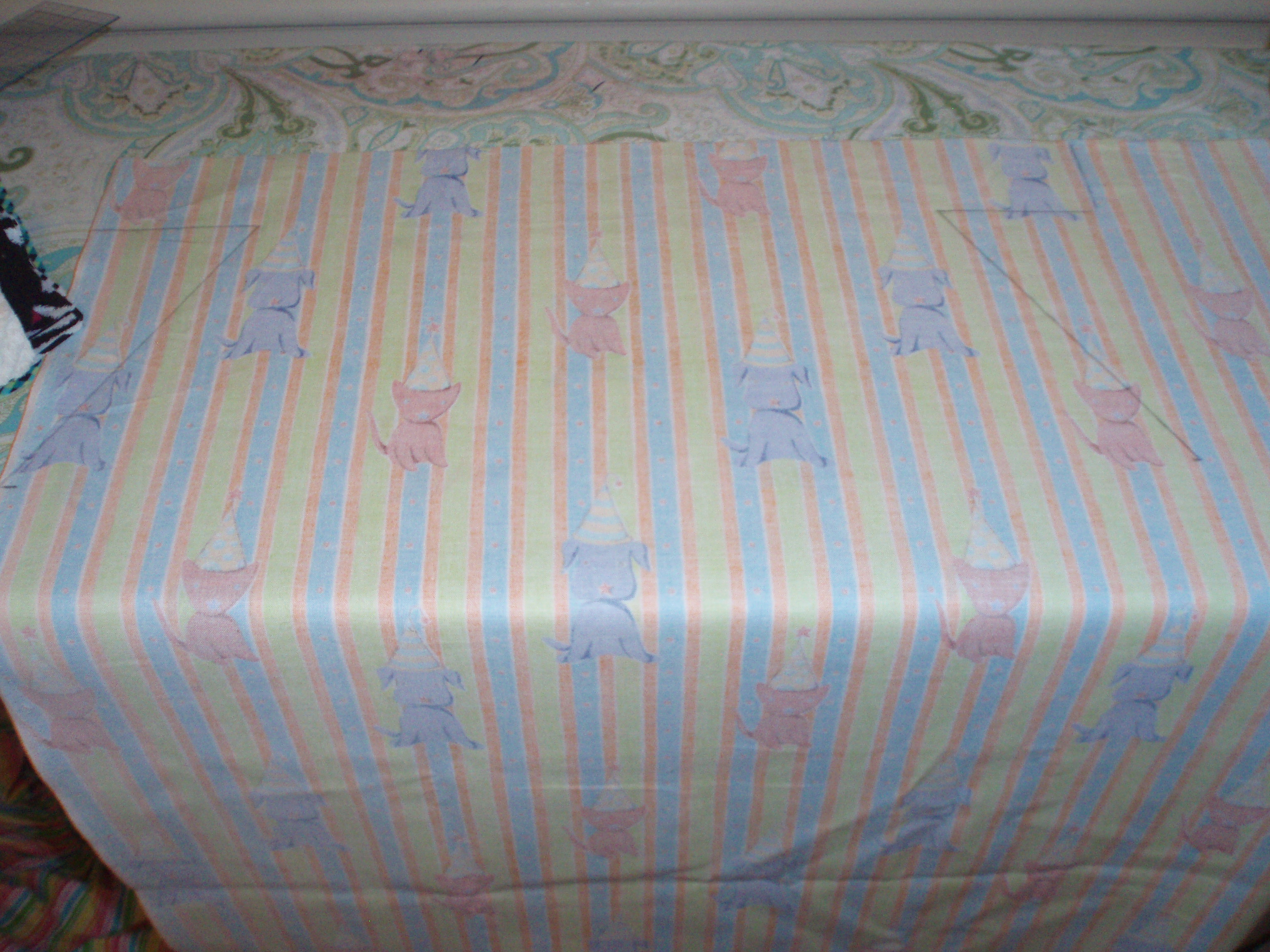
Wrong side of striped fabric of animals in hats with clear grid ruler on top to start measuring the pattern for the superhero cape sewing tutorial

My quilting ruler is 2″ wide and 18″ long. On the back side of your main fabric, mark 2″ from the top a 3 ” line in toward the cape on each side. Wow, that sounded confusing. I line up my ruler on the top of my fabric and draw a line from the outer edge to the 3″ mark of the ruler. Repeat for the other side.

Pattern has been measured and marked and is ready to cut from the fabric.

Now, mark the edge 6″ down from your 3″ lines. Connect the end (toward the center) of the 3″ line with this 6″ mark, creating a triangle! (I did not fully cut out an 18″ by 22″ rectangle in the photo above. As you can see, I just measure it as I went along and cut the whole thing out at once. You can do this or you can cut your rectangles, then remove the triangle parts if you’d like. Either way works.)

Cut out the triangles you just drew.

Main fabric of superhero cape is cut out

You should have one piece of fabric now that looks like this! You can either cut out the other piece using the same method, or you can cut it out like I do.

Using one piece of fabric as a pattern for the second main piece of fabric for sewing a superhero cape

Place your cut piece right side down onto your contrast fabric, right side up. (Right sides together.) (As you can see, I didn’t pre-cut my rectangles since I was using yardage, rather than fat quarters. Either way works.) Pin around the edges, securing both pieces of fabric together. Now cut the contrast fabric out, using the front as your template. Now your pieces are already right sides together and pinned, ready to sew!

If you cut the pieces out separately, you’ll now want to pin both pieces right sides together before you sew them.

If you are going to use ribbon as a closure for the cape, you’ll need to sandwich and pin that in between the fabrics now, before you begin sewing.

Sewing the Superhero Cape

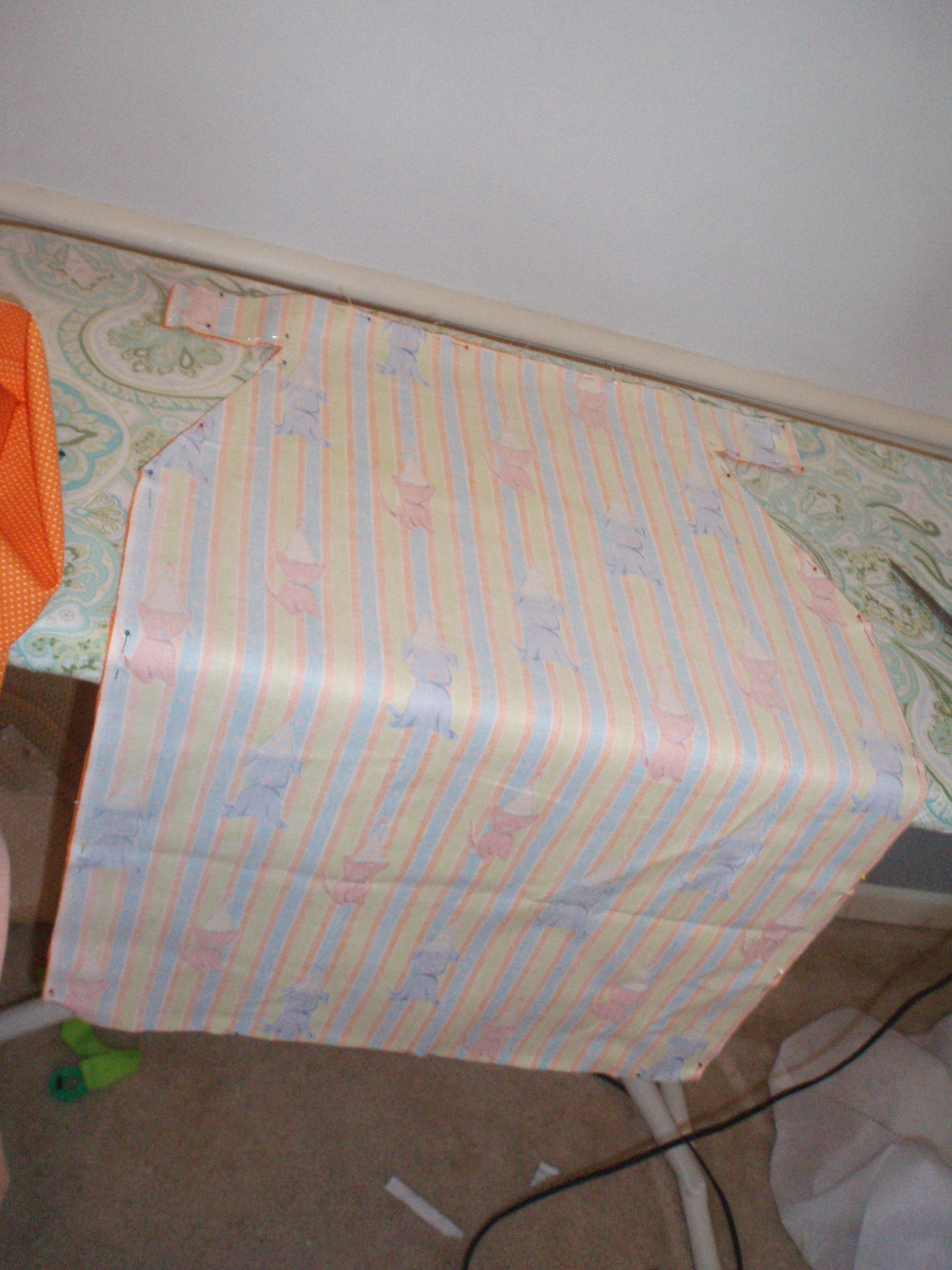
Two pieces of fabric are cut and pinned together ready to sew into a superhero cape

Time to sew! Sew around the edges of the fabric, leaving a hole in the top for turning. Clip your corners and notch the angles of the triangle cut outs. You want them to lay as flat as possible.

Flip your cape right sides out, push out the corners, and press flat.

Topstitch around the edges.

Add your snaps, buttons, or velcro if you need to.

Done!

Toddler in red shirt with orange and striped superhero cape made from this sewing tutorial

As you can see, the “collar” of  the cape is meant to flip over, showing the contrast fabric. However, it works either way! Now you have a reversible cape for your Super Little Guy (or Gal)!

You can do with this pattern as you wish. However, please don’t take credit for the design. It’d be nice of you to share the free pattern with others. Enjoy!

Other Notes From the Parsonage Posts You Might Enjoy

  • Plastic Bag Holder Tutorial
  • Cowboy Bib Sewing Tutorial
  • Crayon Wallet Tutorial
  • Petal Skirt Sewing Tutorial
  • Double Twirly Skirt Sewing Tutorial

Filed Under: Crafts, Family Tagged With: cape, costumes, dress up, free sewing pattern, free sewing tutorial, parenting, pretend play, sew it yourself, sewing, simple cape tutorial, superhero cape, superhero cape tutorial, toddler, toddler cape

Godbold Academy 2020-2021 Curriculum

August 3, 2024 by notesfromtheparsonage 5 Comments

This school year, we’re going back to me fully planning the year. My home education ideals fall somewhere between Classical and Charlotte Mason. We’ve fully done both, and find that a mix between the two works best for us. I rely heavily on real books, but we don’t rely heavily on narration.

I wanted to share my plans with you because I know this isn’t something everyone likes to do. I know a lot of homeschool moms aren’t comfortable crafting an entire curriculum, or they don’t have the time or energy to do so. It just isn’t everyone’s “thing”. It is my “thing”, so I figured I’d share it, since I have it.

This year, we’re cycling back to Ancient History, which I am very excited about. We’ll have kids in all Classical stages and all Charlotte Mason forms. Essentially, I’ll have kids from elementary school to high school, so the plans for this year are for all grades. For simplicity’s sake, I’ve broken down the curriculum into four posts: Morning Basket, Grammar Stage, Logic Stage, and Rhetoric Stage.

Stages are not a one size fits all. You may notice the Logic Stage plans are too easy for your 8th grader, and you want to challenge them in certain areas. Go for it. You may think the Rhetoric assignments are too difficult for your 9th grade, bump them down in whatever subjects you choose or all of it. Swap out the books you don’t want for ones you do want. There are plenty of options out there, I’m just sharing with you what we’ll be doing.

You may notice I include some books that pure Charlotte Mason enthusiasts would consider twaddle. I try to include plenty of difficult great books for my kids to consume, but also know that I personally read twaddle from time to time for my own enjoyment. I’m just not opposed to letting kids read “fun” books (we’ll call them that instead of twaddle) to give them a break from the intense mental load of some great books. If you don’t like a book choice of mine, cool, don’t use it.

I’m simply putting this out there for anyone who wants to take a peek. Use it for your own curriculum. Use it for ideas to craft your own curriculum. Use it to look over and see options that exist. I’m just sharing.

Filed Under: Homeschool Tagged With: Charlotte mason, classical education, classical homeschooling, curriculum, finding curriculum, free, free curriculum, free homeschool curriculum, free morning basket plans, homeschool, homeschool curriculum, homeschooling, morning basket, morning basket plans

33 Tips for Maintaining Your Sanity While Raising a Toddler

August 2, 2024 by notesfromtheparsonage 4 Comments

Image

Meet Emery. Adorable. Right? Come on, you know that kid is cute. Life with Emery is not always easy. I know, I know. You’re looking at that angel face saying, “Certainly he is the most perfect child ever!” Okay, so you might not be saying quite that, but something along those lines. But this kid is a challenge. And it is my daily mission to stay sane, while raising him lovingly and letting him be who he is.

Image

This isn’t my first trip to the Raising-A-Toddler rodeo, and it won’t be my last. I’ve still got years of this stuff ahead of me. I’ve learned some things along the way thus far. And I’m sure I’ll have plenty more of these tips once Ransom enters the ranks of toddlerhood. But for now, here are 33 tips for maintaining your sanity while raising a toddler. There may be some you just cannot do. And that’s cool. There may be some that you just don’t need with your perfectly behaved toddler. Okay. Lucky you. Some of these may be just the perspective changer you need.

1. Messes can be cleaned.

It doesn’t matter how big or small, know it can be cleaned. And if you don’t know how to clean it, grab some Dawn dish soap and jump right in. It can’t be worse than the mess in front of you, right?

2. If you are not willing to DO something about your toddler’s behavior, don’t SAY anything about it.

I call this “saving my nos.” You know there are times when you’re, say, melting chocolate on the stove and you notice your toddler taking book after book off the shelf into a room beyond your line of vision. You aren’t willing to leave the chocolate to burn, so you yell, “No! Stop taking books off the shelf!” Well, your toddler will likely not listen to you. You are then left in the predicament of continually yelling at a little person who now KNOWS you aren’t willing to actually DO anything or you just let it go, and you’ve wasted a “no”. (You said no, they didn’t listen, nothing happened.) You get your blood pressure up about it. And you aren’t even sure of what they are doing in the other room. You might be right, they might be making a book tower to stand on to grab that beautiful ceramic vase they’ve been eyeing for years. Or they might just be giving each stuffed animal a book to read. You don’t know. But to save yourself the future trouble of them testing your no and save yourself the headache of having to keep yelling at the kid when they have clearly tuned you out. Just keep melting the chocolate. You’ll deal with the mess later.

3. Toddler proofing is not the same as baby proofing, and you need to do it.

When your baby was small, you baby proofed your house. You crawled around looking for hidden dangers for baby. You cleared off the coffee table. You put foam edges on your hearth. You plugged all the electrical outlets. But now, that baby is a toddler. And he can reach anything you can. Why? Because he can climb like a frickin’ monkey. (Seriously, Emery can scale walls!) So, that baby proofing you did just isn’t enough. You’ve got to tether the furniture to the walls. Anything of value needs to find a home in a box and hang out in the attic for a few years. Because, let’s face it, those peanut butter covered finger are just drawn to whatever it is Mommy finds most valuable to her. Wedding photos meet sharpie. First edition signed copy of a book, rip….. Glass vase passed down every generation on your wedding day- crash! Save yourself the headache and heartache and just put them away. (And by away, I mean far, far away. The top shelf might be 7 feet high, but your toddler can still get to it.)

Image

4. Embrace the zen of things being already broken.

I once read an article about embracing the zen of toys being broken when you get them. Basically, you get something new and in your mind, the thing is broken. You spend each day that it isn’t broken excited, and loving it for the time. But when the day comes and the thing breaks, you don’t grieve, for it was already broken. Sounds strange. Sounds crazy. But it works. And it doesn’t just work for toys! It works for that awesome coffee cup you just bought. Or those lovely stemless wine glasses that you have been eyeing and finally possess. One day, they’ll break. View that as an inevitability. And when the day comes, and your coffee cup breaks (in the hands of your toddler, I’m sure) or your set of 8 wine glasses is down to 3, you’ll be okay. You won’t be upset. Because you viewed these as transient things.  You enjoyed them while they were whole, and now you can move on.

5. Don’t buy double rolls of toilet paper!

But I’ll have to change my toilet paper more often! Hear me out, here. You buy a double roll, you use it for a few days, then your toddler decides to put the end in the toilet and flush, watching the whole roll unravel on its way down. You just wasted over half of your double roll! Buy the single rolls. When your toddler has his inevitable toilet paper adventures, less paper waste and lesser chance of a clogged toilet. Embrace the single roll!

6. Don’t get over-zealous about potty training.

You know, one of the most stressful events with a toddler is not the messes he makes or the things he breaks. It is teaching him to quit pooping himself. Most parents really stress themselves out over potty training. They have some self-imposed deadline in their head and their child will be potty trained by the deadline, dagnabit! Only, the toddler isn’t aware of the deadline. The toddler isn’t even completely convinced in the necessity of using the toilet. And so the battle begins. I battled with my first with the potty. I begged. I cried. I bribed. I gave up. I resolved to get her on that blasted pink potty! She eventually got it. She’s 5 and she can use the toilet now, praise the Lord. I stressed us both out over something she was eventually going to get. My stressing over it and pushing her did not help her in the least. It did not help me in the least. Aidan got a bit forgotten in the potty training area. I potty trained Imogene and needed a break, though it was “his turn” since he is not too much younger than his sister. I didn’t bother, citing that boys needed longer anyway and I needed a potty training break. Guess what? He still learned to use the potty. On his own. No tears from me. No begging. No bribing. He figured it out all on his own. Now, he is that kind of kid. (You know the type. Engineer brain, I call him. He sees the way things work and he applies it for himself.) But the point is, he learned without my efforts. So, don’t stress out over it. They’ll get it soon enough and diaper days will be behind you.

Image

7. Don’t compare toddlers!

If you’ve got more than 1 child, you know that no two kids are alike. Yet, you’ll often find yourself comparing what your younger one is doing compared to your recollection of what the older one was doing around the same age. You’ll find yourself comparing your toddler to the one you see at the park. Stop it. Stop comparing. You’ll only frustrate yourself. The kid you see at the park, you see for just a few moments of her day. You don’t see the little train wreck she is a bed time or the way she pitches a royal-knock-down-drag-out fit if she even senses healthy food of any sort in her vicinity. Assume you see every toddler at their best. (Or, if you see their fall-on-the-floor-thrash-around fit, assume they are at their worst.) But don’t compare. I’ve had 3 toddlers thus far and can tell you they are each very different and each complicated in their own way. So what if Suzy 2 year old can recite her ABCs and count to 20. Your kid can climb trees higher than most adults!

8. Find a way to internally mock those “my kid is better than yours” or “I know everything” parents.

I’m not saying be mean to them. I’m just saying, take lightly everything they say. So, Suzy can count to 20. I’m sure there is something Suzy cannot do. Don’t let Suzy’s Mom make you feel like a bad parent. Your kids are different. You are different. She doesn’t know your kid. She doesn’t parent your kid. You re the expert on your child. Ignore Suzy’s Mom. Making a farce of such parents will keep you from taking their criticisms and “advice” to heart. It’ll keep you sane.

9. Don’t be embarrassed by your toddler’s escapades- they are no reflection on your parenting ability.

People without toddlers look at a tantrum and say, “Look at that horribly parenting. If that were my child I would, blah de blah blah. And furthermore, my child will never behave in that manner!” If you’ve ever had a toddler, you look at a toddler’s tantrum and say, “Man! I remember those days! Stay strong, Mama. This too shall pass.” See, there is always going to be someone in the crowd (usually the least experienced) who will have some critique and assume your parenting is to blame. But the majority of the crowd knows that this is just what it is like living with a toddler! So ignore the few that don’t have a clue what they’re talking about. Ignore those shocked stares. Let your toddler pitch his fit because his Happy Meal now comes with fries and apples. (How dare they give me both and not let me choose anymore!) The “experts” around you (those normal moms who have toddlers or have had them) sympathize. Don’t feel the least bit bad or guilty. Toddlers pitch fits. Some more than others. You’re still a good mom. (And in my book, you get bonus points for continuing on your merry way and not let the fit even so much as faze you. I know you are my sister, a girl after my own heart!

10. What works for one toddler, will not work for all toddlers. What works for one mom, will not work for all moms.

You’ve been on the internet (you’re on it now!), you’ve read all the advice from all the “experts” about how to potty train, how to get your kid to eat better, how to limit temper tantrums, how to stop your toddler from biting. You’ve tried some of this sage advice. You feel like a failure when it doesn’t work. Wait! What happened?! Andrew’s Mother swore up and down bitter apple would stop my child from biting his brother again! But it just made my child more angry and he bit me! What did I do wrong?! You didn’t do anything wrong. You just aren’t raising Andrew. (And I do not recommend bitter apple for biting. I’ve never even heard of using it with kids, only dogs. So don’t try it and cite me on it.) You’re not Andrew’s mom. So, though the “experts” may claim (and I always check and see if the expert has even raised children) a fool-proof plan to sneak veggies into your child’s diet, know your child may not be fooled. There is no one size fits all advice for toddlers. There is no one size fits all advice for parenting. I’ve got 4 kids and have to do things differently for all 4. You think you’ve got this parenting thing in the bag, and then the next kid doesn’t respond to your ways. Nothing is wrong with them, or you. You’ve just got to adjust and adapt.

11. Just because he likes it today, doesn’t mean he’ll like it tomorrow. (Just because it works today, doesn’t mean it will work tomorrow.)

These toddlers are fickle little things. Today, string cheese is their favorite snack in the world! Tomorrow, they throw the cheese at you and scream! (You fool! Don’t you know string cheese is out! Fruit leather is the new string cheese! Sheesh.) Today, you find he’ll actually clean up his own toys if you play the “Clean It Up” song by Yo Gabba Gabba. Tomorrow, you turn the magic tunes on and he makes a bigger mess! Don’t fret. Toddlers are fickle. It isn’t you. Just roll with it.

12. Put the number for poison control on speed dial.

You know, the moment your kid ingests floor cleaner is usually a few moments after he flushed that poison control magnet down the toilet. Go ahead and put the number on speed dial. And don’t worry, poison control assures me that they aren’t tracking my calls for investigative purposes. (Yes, I called so much I had to ask.)

13. Put the number to the local Children’s Hospital Nurse Line on speed dial.

You’re at the playground, suddenly the stick that was a pretend sword is now in your toddlers eye. You’ll be glad you’ve got the nurse line on your speed dial to determine if your should take your toddler to your regular doctor, urgent care, or the ER.

14. “Child Proof” is a relative term.

When dealing with a toddler, “child proof” simply means it buys you a little time before they get into whatever it is you’re trying to keep them from. They’ll eventually figure out those cabinet locks. They’ll eventually figure out the child-proof medicine tops. The trick is to not give them long with those things, so hopefully you don’t have to call poison control. With a toddler, you want to double and triple up your child-proof stuff. (Medicine in a child-proof bottle, inside a tote with a latch, inside a cabinet with a lock.) Hopefully you’ll catch them before they get through all layers of protection.

15. Switch to more child-friendly cleaners, at least while they’re in this phase of life.

I know, you love your bleach and ammonia. But how much are you going to love your toddler getting into those things? Consider switching to more kid-friendly cleaners, at least until this exploring and destroying phase is over. (Fabuloso is safe-ish around toddlers. It is just soap, so drinking it just upsets the tummy. I know from personal experience.) Switch to vinegar or just soap and water.

16. “Spill-proof” is a relative term.

Spill -proof usually means that when the cup falls onto its side, it does not spill completely. However, when a toddler shakes it upside down, it might sprinkle. When they throw it against the wall, it might leak. And of course, they could just suck it out and spit it all over your white couch.

17. Lids are a must on all cups- even yours.

You think to put your toddler’s drink in a spill-proof sippy, but what about your sweet tea you keep with you all day? Put a lid on that, too. It won’t keep it from getting spilled, but it will minimize the mess when it is spilled. Consider travel cups for everything anyone in the house is drinking that isn’t at the dinner table.

18. Invest in a steam cleaner.

If you’ve got carpet and a toddler, you need a steam cleaner. Even if you have your carpet professionally cleaner twice a year, you need a steam cleaner. Some messes are just less stressful with a steam cleaner around.

19. Remember, your main goal of the toddler years is simply keeping the child alive.

If your toddler is alive at the end of the day, you’ve done your job. It doesn’t matter that all they’ve eaten is dog food and they’re covered in marker. They are living. No permanent damage has been rendered to them today. Good job, mom!

20. Delight in small victories.

Life with a toddler can be rough. It is easy to get bogged down. You’ve cleaned mess after mess, the house is still a wreck, the kid is throwing his umpteen-thousandth temper tantrum, and you’re about to loose you shmidt. Learn to celebrate your small victories! He colored mostly on the paper with the Sharpie this time, only a few marks on the table- that is improvement! He ate 2 beans at dinner tonight when yesterday he tossed his plate against the wall. Winning! He brought me a book to read to him! Sure he only sat for a few pages, but he is interested in reading! Yes!

21. The cuter the outfit, the more staining the mud/lipstick/paint.

It never fails, I put my toddler in the most adorable outfit and before we even get out of the house, it’s ruined. And not ruined like, he can’t wear it today. Ruined like, he’ll never wear this again. It just seems to always happen. The cuter the outfit is one him, the bigger and deeper the stain. Save your sanity. Enjoy the cute outfit for the two seconds it is cute. If you have to, put it on them and take a picture immediately. We all know the outfit will never be the same. (This is why I laugh when people say, “Oh, you’ve got three boys! At least you already have all the boy stuff to pass down.” Pass down? What’s that? Do boy’s clothes beyond a certain size make it out in one piece?)

22. If you don’t make the most of unconventional canvases, they will.

Toddlers love to make messes. It is just part of their little natures. If you don’t provide unconventional canvases to make messes upon, they’ll find their own. So, let them color the side of the house with chalk. Let them use the chalk to “decorate” your brick hearth. Because if I’ve got to choose between cleaning chalk of the hearth at the end of the day and cleaning Sharpie off my white chenille bed spread, I’m going with the hearth. (The second is impossible.) Their messes will be made. So take advantage of opportunities to put the messes in the best place for you.

23. The second you try to show them off, they’ll act a fool.

Emery can count. He can count very well. The second I say, “Emery, show Mrs. Jan how you can count.” he acts out. Not just folding his arms and refusing to count (though he has done so before). But yelling, screaming, kicking, “Noooo!”

Emery tells jokes. He only knows one joke, but varies it constantly. If I say, “Emery, tell Daddy your joke.” That kid will act like I’ve got two heads. Suddenly the word “joke” has no meaning. So, I prompt him. “Say, ‘Knock, knock!'” “No!” “Come on Emery. ‘Knock, knock!'” “NOOOOO!!!!”

24. Don’t take it personally.

They love you. Really they do. Screaming “No!” in your face and then throwing a cookie at you isn’t a personal affront. They don’t think poorly of you just because they scream “SHUT UP!” when you say, “I love you, sweet boy.” None of it is personal. It isn’t you against them. It is just them learning how the world works. (And by all means, you can tell them not to tell you to shut up or tell them they hurt your feeling. Though, I wouldn’t expect empathy- they’ve got none. Little sociopaths.) So, don’t get your feelings hurt when they refuse your kisses. They are just flexing their autonomy. It’s nothing personal.

25. They do not like age appropriate toys.

Save your money, they aren’t going to play with that toddler toy that is “all the rage.” Being a top toy only means that lots of parents buy it, not that lots of kids like it. You get them a play broom, they’ll still scream for the Swiffer. You get them a play kitchen, they’ll still be up under your feet to “help” you cook. Toddlers like the real thing. No fakes. So, shorten the Swiffer and let them to town. (You can actually shorten a Swiffer to be kid sized. Just remove one of the rods in the handle.) Give them a duster and let them work. Hand over spoons and bowls and let them play.

26. Limit your expectations.

They are toddlers. It is a difficult transition phase for you. They were your baby, now they are growing. As they grow, it is easy to have unrealistic expectations. While we can’t treat them like babies, we also can’t expect 5 year old behavior from a 2 year old. Just because they can sometimes help pick up toys doesn’t mean we can expect them to keep their rooms clean. Just because they sometimes refrain from taking the toys of others, doesn’t mean we expect them to be self-giving all the time. Anytime you find yourself frustrated that your toddler isn’t behaving as they should, think about what it is you are expecting of them and decide if it is an acceptable expectation. Don’t sell them short, but don’t hold such high standards they’ll always fail.

27. Don’t expect them to just go with the flow.

There are toddlers who go with the flow. It is built into their little personalities. They’ll always be that way. Everyone cannot be that way. So while you may wish you’re little one would just go with the flow, he may be yelling, “Go with the flow?! Woman! I am the flow!” And you know what? The world needs those kinds of people. Yes, they are inconvenient toddlers, but they make awesome leaders.

28. Bribes just don’t work. Save your breath and money.

Bribing a toddler is a futile activity. They just don’t really get the whole delayed gratification bit, which is what a bribe is. Putting aside the discussion on if it is best or not for kids, plain and simple, it just doesn’t work for toddlers. You may find it works one day, because the kid is tired of feeling amicable that day. But you’ll find that with a toddler, more often than not, your bribes will fail. So save your efforts and don’t bother attempting it.

29. You don’t have to entertain them all day.

That is a novel idea to some parents, I’m sure. But the fact is, your toddler will be happy, smart, and well-adjusted without your over-enthusiastic attempts to keep him that way. They can play alone. They can invent their own games. You don’t have to schedule activity after activity for them. It is okay to sit on the patio and read while they pick at blades of grass. You don’t have to be actively playing with them all day every day. Sure, there are times you’ll want to have a planned activity for them, but they flourish with free time. I know you think, “Lordy me! He’s just bored to death. He’s just piling up rocks and then moving the pile! I need to do something with him.” But stop! He’s learning. He’s exploring. He’s safe. He’s happy. You can sit back, drink your lemonade and continue reading your Sookie Stackhouse novel. If you’ve been entertaining your kid every hour of the day, you may find him resistant to playing alone at first. Encourage him to spread his little wings. He’ll be entertaining himself in no time.

30. Enlist in the help of his little friends.

Sometimes, talking through toys is the best way to get your toddler to listen. With Emery, that means talking to Ribbert, his Scentsy Buddy. A few evenings in a row, Emery suddenly HATED the concept of bedtime. This, from a kid who would BEG to go to bed just 8 months before. I tried talking to Emery. I tried just making him go to bed and protest and keep putting him back in bed. In desperation, I turned to Ribbert. I said, “Ribbert, stop screaming at me!” Immediately, Emery was quite. I continued, “Ribbert, it is bedtime. There willl be plenty of time to play tomorrow, but tonight, you must go to bed.” Emery joined in, “To bed, Ribbert!” I tucked Emery and Ribbert in bed. “Would you like me to sing ou a song or tell you a stroy, Ribbert?” Emery replies, “He like song. Twinkle. Twinkle.” I sang the song. Kissed Emery and Ribbert, and they were in bed. Suddenly, it wasn’t a power struggle to Emery. I took it from being between me and Emery and made it between me and Ribbert. Emery was moved from his spot as being in the fight for control to being an observer. He was free to “give in” without loosing his autonomy. I gave him an out to stop fighting.

It won’t always work. (See the previous point about everything not working for every kid, every time!) But if you’ve tried everything else, give it a shot. if nothing else, it lightens the mood.

31. Give them options, but not too many!

Toddlers are learning that they can control things. They are suddenly the boss of their world. From babies being carried about with no control over who was holding them, where they were, what they ate, or what the wore they move into this new stage where they can cause things to happen. If they scream loud enough, long enough, they get their way. They want choices, dangit! The trick is to give them options so they can choose. Let them have some control in their lives. But don’t overwhelm them. I usually give two options when I can. At bedtime, I pull out two sets of pjs. This turns the tables. It isn’t about if they’ll consent to wearing the pjs, it is about which pjs they’ll wear. The same goes for snack time. The entire contents of the kitchen aren’t up for grabs (it would take forever, and many mind changes to get him settled on anything). He can choose a banana or some cheese crackers. He’s happy. I’m happy.

Of course, there are times when neither of the two options is sufficient. That happens. Stinkin’ tiny, cute dictators! You just have to know what things you’ll just let go and which are non-negotiable. Are pjs for bed a must or can they sleep in their diaper alone? Are you willing to say “no snack” or is it okay that they chose a fruit leather when you offered crackers or a banana. Is the couch an acceptable napping spot or do they really have to go to their bed, even if it means they won’t sleep? That stuff depends on you and what you know of them.

32. If it looks like poop, treat it like poop until it is proven otherwise.

If a toddler walks over to you holding anything that appears to be poop, you assume it is poop. If you find a “painting” on the wall and you think, “Is it chocolate or poop?” You treat it like poop. Never smell a toddler’s could-be-poop hands. You’ll just end up with poop on your nose. In the end, you’ll never regret treating the come-to-find-out-it-is-only-chocolate like poop. You will, however, regret assuming chocolate when it turns out to be poop. And 9 times out of 10, it’s poop.

33. Enjoy it. But don’t feel bad that you don’t enjoy the moment you’re cleaning human feces out of the carpet.

You know they’l only be toddlers once (Praise the Lord!). Take the time to enjoy the funny things they do and say. Enjoy watching them explore and learn. Celebrate this time with them. But don’t feel guilty that at times, you just can’t find the silver lining. Don’t feel bad about being annoyed that you’re steam cleaning chocolate footprints off the floor for the fourth time this week. (Blasted “fridge lock” never worked correctly!) Sometimes life with  toddler just sucks. Cleaning up their messes while being screamed at is no fun. Maybe you’ll laugh about this one day, but today, it ain’t funny.

Write down those messes they make. Maybe one day, you’ll get a book deal writing about all these escapades. That might make cleaning permanent marker off the hardwood floor worht it. Or maybe you’ll just pass your notes on to this toddler when he’s a grown man with his first child turning two. It just might bring him a bit of perspective. Or he’ll assume you are a vry lousy parent to allow him to stab his eyeball with fabric scissors not once, but twice! It’s okay. By the time his first child is 4, he’ll understand.

He’ll be a man one day. And this one, he’s going to be Chuck Norris.

Filed Under: Child Development, Family Tagged With: advice, Mom, mothering, parenting, sanity, toddler

Omega Heirloom Bible Review

June 17, 2024 by notesfromtheparsonage 2 Comments

The Omega Heirloom Bible from Crossway is a premium Bible that feels fantastic in hand and reads so clearly. Let’s take a closer look!

Pinterest sized image with title on top and a picture of a dark brown leather Bible on a slightly blue wood table.

Crossway sent me this beautiful Bible from their premium Bible collection. At first, I was thinking it would be exactly like the Alpha Edition Heirloom Bible, but I was wrong! While similar, this Bible is uniquely different.

Bible Packaging

Black Box with gold lettering of the ESV Omega Heirloom Bible on slightly blue wood table.

This Bible comes in the two piece black box from Crossway. Inside, you’ll find a velvet wrap for the Bible itself. It is so beautifully packaged. You can’t see this bit, but the smell of the leather really hits you when you open the box!

Brown leather Bible inside velvet wrap and black box on slightly blue wood table.

As always, Crossway’s Heirloom Bibles have a lifetime warranty. This is a Bible meant to last forever. It is meant to become an heirloom.

Omega Heirloom Bible Exterior Features

Top edge of the dark brown leather of the Omega Heirloom Bible from Crossway on a slightly blue rod table.

This particular Bible does come with two cover options. You can choose from the black goatskin option or this dark brown slick Wellington Leather. The Wellington leather cover does get marks from wear, but I actually like that a lot more. I love the look of worn leather, and I can’t wait to see this beautiful leather fully worn.

I know the worn leather and how easily it scratches might bother some people. Think about that slick leather getting a scratch. If you are annoyed by that thought, maybe go for the black goatskin cover.

The spine has those raised lines across it. The words on the spine are pressed into the leather, not printed onto the leather.

Picture of Omega Heirloom Bible from the bottom showing the four ribbon markers and the golden page edges.

This Bible comes with ample ribbon markers! It has four and they are different colors, which I love. You have black, white, dark brown, and a medium brown.

The gilded edges are those that are gold with the red undertone– you know which ones I mean. When you flip the pages you get this flash of like a rose gold type color.

This Bible is a thin line style Bible. It is larger than the Alpha Heirloom Bible. The official measurements are 6.125″ x 9.125″. As you can tell in the pictures, it is thin. What you can’t tell is the slight floppiness of it. (For some reason, every Bible that arrives in this house, The Pastor grabs it and shakes it to see how it feels in the hand when you get fired up preaching and start shaking the Bible at people.)

Omega Heirloom Bible Interior Features

The interior of this Bible is beautiful. It is double column in a very easy-to-read 10.5 point font. You can see it contains cross-references but not study notes. The spacing of the letters and words is excellent and makes for a very comfortable and easy read.

As far as extra features, this Bible is pretty simple. It contains front dedication, marriage, birth, and death pages that are a thicker and slicker paper than the rest of the Bible. There is a good sized concordance in the back. Several full color Bible maps on thick, slicker paper are also in the back. That is really all of the extras there are.

I also need to talk about the paper itself. This European paper they use in their premium Bibles is just next level. It is so smooth and the pages don’t stick together at all. But it is also thin, like Bible paper should be. It isn’t something you can really photograph, so you’ll just have to believe me. (Unless you happen to be over at the parsonage for some reason and then you can feel it for yourself!)

Thoughts on the Omega Heirloom Bible

The size of this Bible is The Pastor’s preferred size of preaching Bible. That is where I can see this being the right Bible. This is an excellent everyday preaching Bible for a Pastor, Teacher, or Missionary. It isn’t a study Bible, but you can study this Bible (especially with all the cross references). There isn’t really room for notes in the Bible. The ease-of-reading and size make this a very ideal Bible for teaching and preaching.

My husband’s first preaching Bible was just a standard thin line leather Bible. It was a fine Bible (though no one wrote on the dedication page, which always broke my heart a little– always write on the dedication page), but it didn’t last. About fifteen years into ministry, pages were falling out and the Bible was falling apart. It was hard for him to let go of that Bible because it meant so much to him. And it made me sad that he didn’t have a better Bible to begin with.

That is why I think all preachers should be gifted an amazing premium Bible. It is a heartfelt way to put your endorsement behind their calling. It is a meaningful thing to do that is also useful for them. I can just imagine how beautifully worn this Bible could be over a lifetime of service to Jesus. Even 15 years in, it isn’t too late to get a nice Bible for sharing the Word to the world.

This is probably not the Bible for everyone. It isn’t the Bible for me. I need space to write. I want study notes. I’m not a nice, compact simple Bible type. I’m married to the nice, compact simple Bible type. So, just because it isn’t for me doesn’t mean it isn’t an amazing Bible.

Other Notes From the Parsonage Posts You Might Like

  • Heirloom Bible, Alpha Edition, Review
  • Heirloom Bible, Heritage Edition Review
  • ESV Pocket Bible Review
  • ESV Personal Study Bible Review
  • Large Print Single Column Journaling Bible Review

Things I Have to Say

This post contains affiliate links. Affiliate links are a great way to support your favorite content creators. We make a small commission when you buy things using these links.

Filed Under: Bible Reviews, Faith Tagged With: Bible, bible review, crossway bibles, esv bible, heritage bible, omega bible, omega heritage bible, premium bible

Double Twirly Skirt Tutorial

April 12, 2024 by notesfromtheparsonage 10 Comments

Double Twirly Skirt written with image of double twirly skirt on bottom

Sew an adorable and flexibly sized skirt with this double twirly skirt tutorial. This is a very easy skirt to sew, but it does use quite a bit of fabric.

Confused looking girl in double twirly skirt with birdcages and stripes on the fabric.

I’ve got something new for you, though! If you are like me, you love a good twirly skirt! With some fabulous fabric, a single layer twirly skirt is awesome. However, nothing compares to the fullness and twirl of a double twirly skirt! My daughter loves them! I love them. She looks so adorable and girly in them. They make her look more graceful (though they don’t actually make her more graceful).

I can also make them longer, meaning they’ll fit longer and don’t look like some of the tiny clothing they make for 4-year-old girls these days. (Seriously, why is it so stinking hard to make clothing for little girls that makes them look like little girls? Why do they need to look like sassy teenagers (or worse)?)

Though this skirt looks complicated, it is simple. Super simple. Only sewing in straight lines simple. This is a great project for beginners, since your only pieces are rectangles. Easy! And the end result looks so… fancy and fabulous! (Couldn’t decide which word would best describe it!)

Supplies for Double Twirly Skirt Tutorial

Fabric cut out for double twirl skirt tutorial

Here is what you need for the project:

– scissors

– sewing machine

– something with which to mark on fabric

– ruler and/or yard stick (I use both.)

– thread

– fabric (I used 4 different fabrics in my version, but you can use just two if you’d prefer.)

-You’ll need a double length of the under layer fabric. (I made my under skirt 15″ long, so I needed 30″ of fabric.)

-You’ll need a double length of the over layer fabric. (I made my over skirt 11″ long, so I needed 22″ of fabric.)

-You’ll need 6″ of your waistband fabric.

– If you MAKE a tie, you’ll need 4″ of fabric for that. You can also use ribbon, rope, twine, shoestring, whatever. You can also use double or triple elastic if            you prefer. The double skirt is kind of heavy, so it needs something more than just some 1/4″ elastic holding it up.

Cutting Your Fabric

Decide how long you want to make your skirt. If you are making a skirt for an infant, you only want to use one width of the fabric, instead of two. (Having just one large rectangle, just one small rectangle, just one waistband piece, and just one length for the tie.) Anything over a 2T, keep reading.

Your under layer should be AT LEAST 2″ longer than the over layer. I typically keep it between 2″ and 5″ difference, depending on the fabrics. (And sometimes depending on how much of a fabric I have.) For my skirt, I made the under skirt 15″ long and the over skirt 11″ long. My model above wears a size 5 in little girl’s. So, the length you decide on will determine height of the rectangles you’ll cut.

From you under layer fabric: Cut 2 rectangles 20″ x the length of your skirt on the fold. (When you open the rectangle up, it will be 40″ x length.) (Mine were 40″ x 15″)

From you over layer fabric: Cut 2 rectangles 20″ c the length of your over skirt on the fold. (When you open it up, it will be 40″ x length.)(Mine were 40″ x 11″)

From your waistband fabric: Cut two strips 20″ x 3″ on the fold. (Opened they will be 40″ x 3″ each.)

From your tie fabric: Cut two strips 2″ across the length of your fabric.

Tip

You can decrease the width of the skirt, taking some of the “poof” out if you’d like. I don’t recommend any less that a total of 40″ circumference. You can add poof by using all the fabric all the way to the edge, but I prefer to cut a bit off to make sure my measurements are even. Some fabrics may say 44″ wide, when they are in fact a bit more or less.

Let’s Sew a Double Twirly Skirt

Fabric held in hand in front of sewing machine showing the right sides of the fabric are touching

Working on the under skirt first, place the right sides of your two fabric rectangles together and sew the short sides. You’ll want to go ahead an finish your seams. I serge mine. You do whatever it is you do to yours. (Zig-zag, french seam, whatever.)

Bottom of double twirly skirt is hemmed

Once your side seams are all sewn up and finished, you’ll want to go ahead and do the hem. Hem in however it is you hem it. I serge mine, then turn the serging under and sew. You can do a double fold hem, or whatever hem it is that you like.

Put the under skirt aside.

Placing the two layers of the double twirly skirt together

Now, we’re going to do the same thing with our over skirt (the short layer). You’ll sew the short sides of the rectangles right sides together. Finish your seams. Hem the bottom. Now, you have both the top and the bottom layer done!

Sewing the Waistband

Waistband of Double twirly skirt tutorial

Now, turn your attention to the waistband. Sew the short sides of the two strips right sides together. I serge mine, but you really don’t have to finish the side seams of the waistband. The seams will be hidden inside the waistband of the skirt, so you can skip the finishing. I’m just weird. Instead of hemming the bottom, you’ll finish the top. I just serge mine, since it will be on the inside of the skirt. You can zig-zag over the edge if you prefer, or just do a single fold hem, since the unfinished edge will get enclosed in the waistband.

Button hole sewn into waistband for threading elastic and drawstring through

For the tie, I like to place a buttonhole on my waistband. It seems easiest. Some people like to leave a portion of their waistband seam open, but I always mess that up somehow. A buttonhole near the side seam, toward the bottom of the waistband works out perfectly for me. Place it low enough that it will be on the front of the skirt, but high enough it won’t get caught in the seam. You can do the button hole horizontal, instead or vertical, but the placement is a bit more tricky that way.

Putting the Double Twirly Skirt Together

Sewing the layers together

Putting the under skirt and the overskirt together now. With the wrong side of the over skirt facing the right side of the under skirt, align the tops of the skirts, matching the side seams. Baste around the top of the two skirts. (Basting is sewing a straight line with the longest stitch setting.) You’ll want to baste the edges closer to the edge than your seams normally are. (If you sew with a 1/2″ seam, baste at a 1/4″.)

Wrong side of waistband showing all layers sewn together

Now, you’re going to attach the waistband to the skirt. With the wrong side of the waistband facing the right side of the overskirt, sew around the bottom of the waistband/top of the skirt. Here is why it was important to baste closer to the edge than you normally sew. You’ll want your basted line hidden, and it will be now!

Pressing the waistband prior to sewing

Press the waistband up. You’ll want your seam toward the top of the waistband. Believe me, this step will help the next go smoothly.

Sewing the waistband of the double twirl skirt over.

Fold the waistband over and sew down. I line up the top line with the sewn line on the skirt. Don’t fret if your line is not completely straight on the front of the skirt. No one will really see it.

Making The Drawstring

Sewing the drawstring together

If you are making a tie, you’ll need to sew the short sides of one side of the tie strips together. Just one side. Otherwise, it will be quite difficult to use.

Presses the edges of the drawstring flat

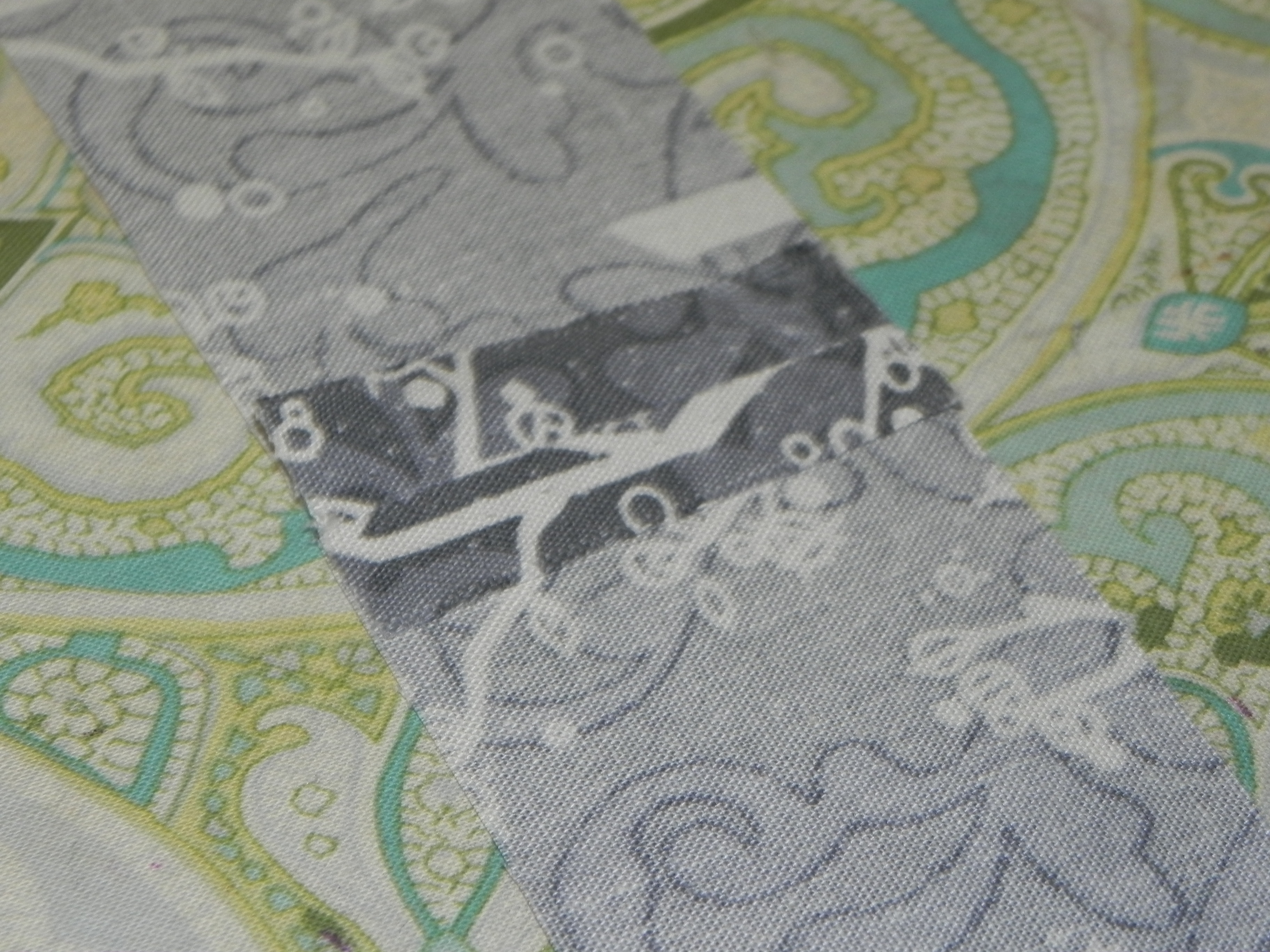
Press the seam open.

Press drawstring strip in half lengthwise

Fold the strip in half and press. (See the picture for the correct version of half.)

Folding edges under to make drawstring

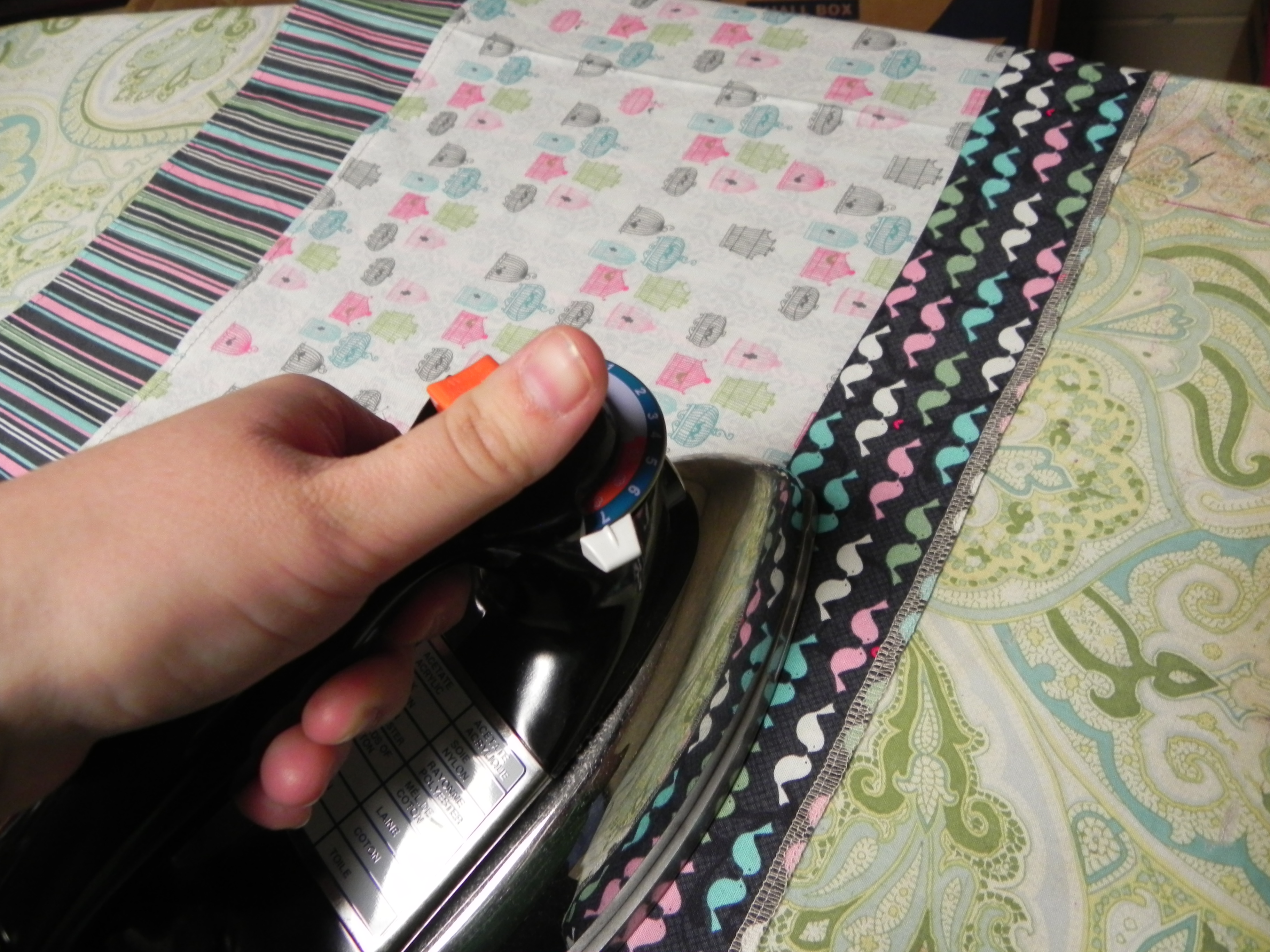
Fold one edge toward the center and press. This is simple, though it does take some time to press down all 80″ of tie. Watch your fingers! Get them too close and you’ll suffer burns!

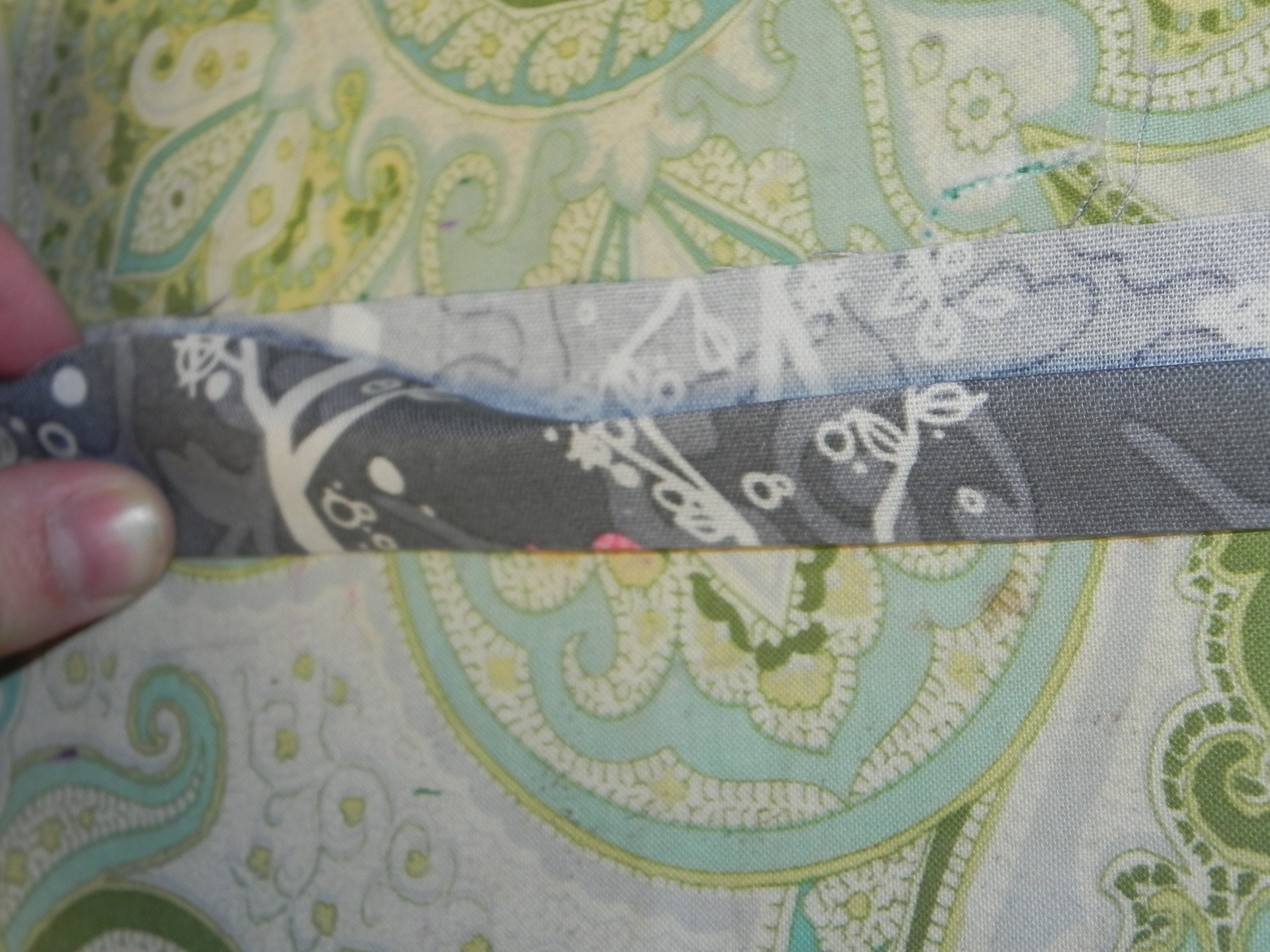
Pressing the other edge under to Mae drawstring for the double twirly skirt tutorial

Press the other side in toward the center seam. Now, you have what looks like double fold bias tape, which would be exactly what it is minus being cut on a bias.

Sewing the drawstring

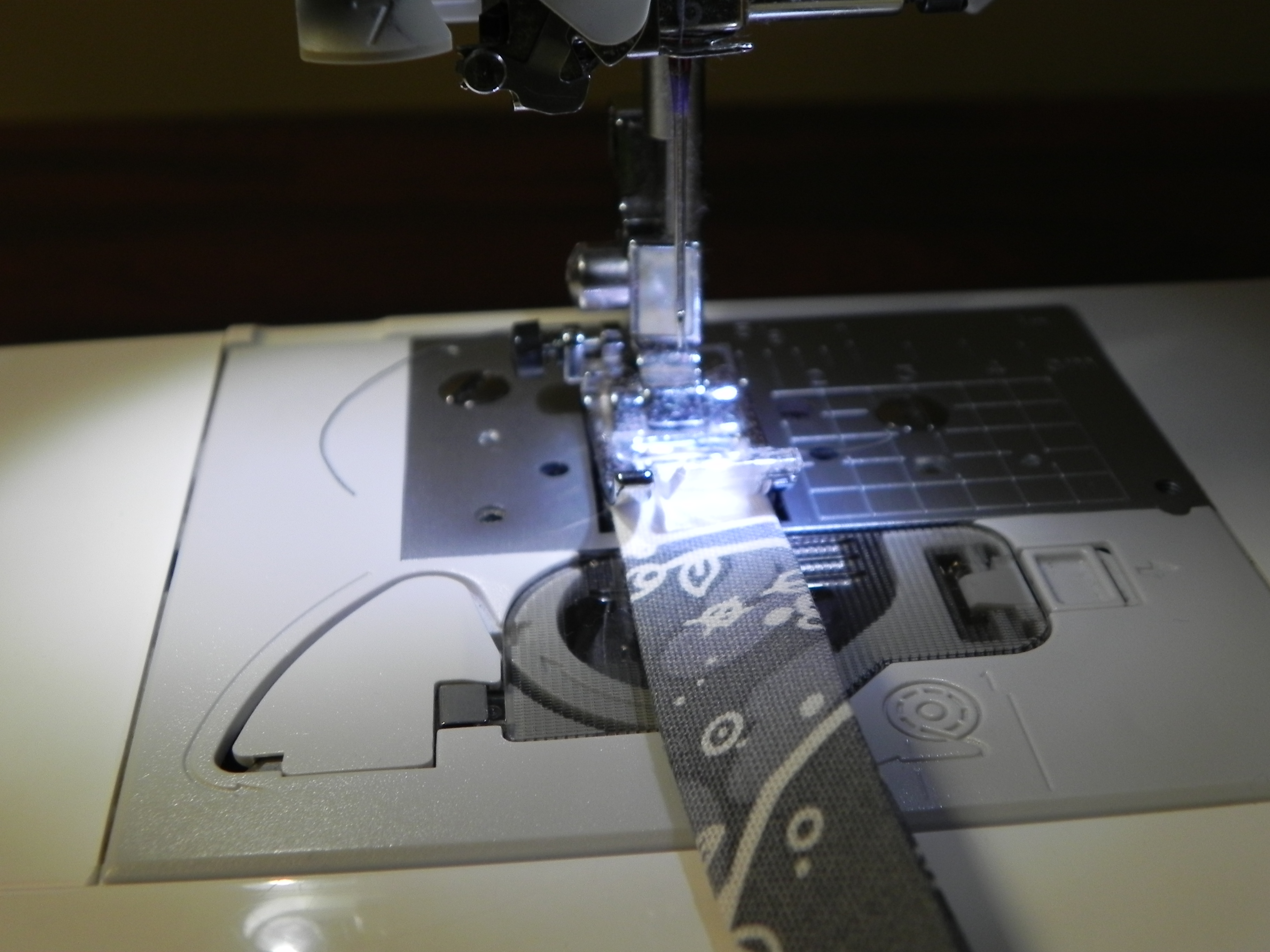
Sew down the middle of the tie. You CAN just do a straight stitch. I prefer to do a zig-zag.

Stitch options on BabyLock Crafter's Choice sewing machine

Or if you happen to have a machine with some fancy stitches that you never get to use, you can use one of those. Ties are a great chance to use those stitches, and if you mess up, no big deal, it is just a tie.

Adding The Elastic

Securing the ends of elastic

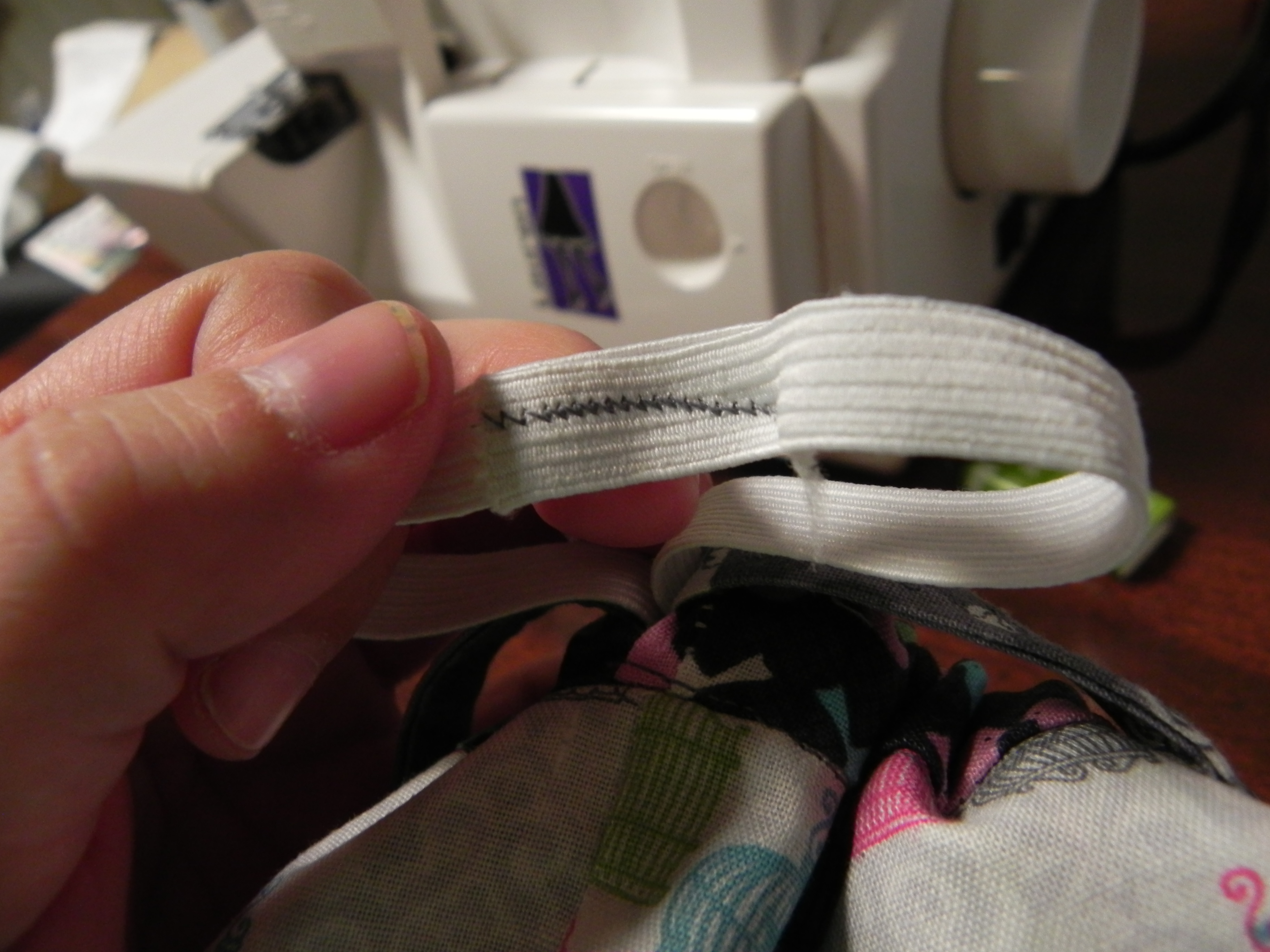
Now, grab your piece of elastic. (You want the skirt to fit snug, but not too snug. The elastic really isn’t going to do much holding the skirt up, it is just for shape and keeping you from having to regather the thing every time you wash it.) Pin your tie to your elastic with the tie on the front. Also put a pin on the end of your elastic so it doesn’t just shoot straight through the skirt. The tie is long enough that you don’t have to worry about it.

Sewing the elastic closed with an elastic stitch

Finishing The Double Twirly SkirtTotorial

Thread the tie and elastic through the waistband. Sew the ends of the elastic together. Pull on the tie and get it even on your skirt. The elastic will probably pop right into place while you’re messing with the tie.

tie the ends of the drawstring

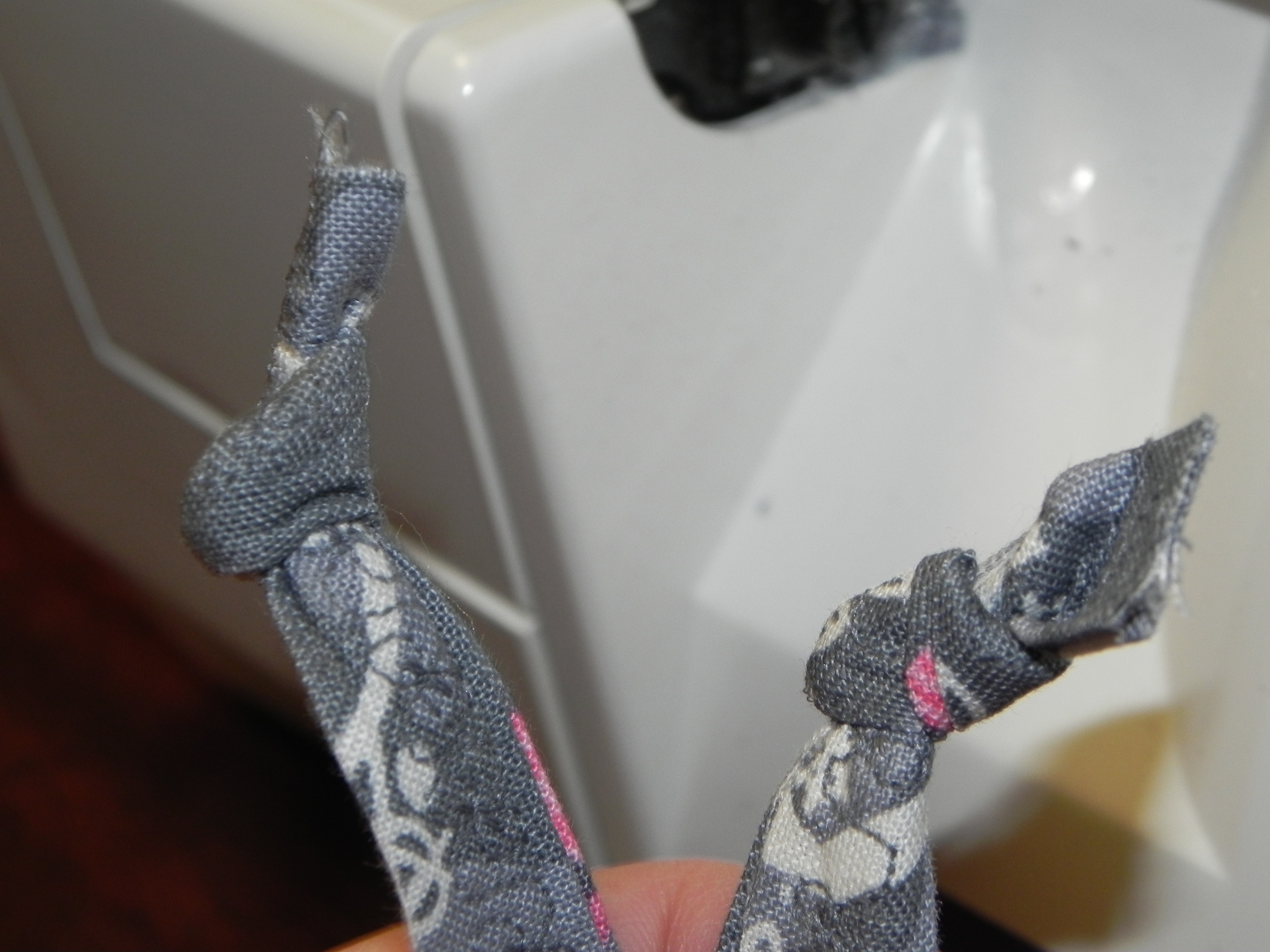
Cut your ties to a manageable length. (That length depends on the waist of the wearer and how long you the tie to hang.) Tie the ends of the tie in little knots.

Tie the tie in a bow and you’re done! One of my favorite things about this skirt is that it lasts forever! (I’m updating this in 2023. The little girl in the pictures is now 16 and her 4-year-old sister is wearing this skirt now!) This thing will fit your little princess for a very long time! It will fit until it is too short, no outgrowing the waist on this thing! My daughter’s favorite thing about this skirt is that it is SUPER twirly. She loves the princess-like fit. Enjoy!

Double Twirly Skirt Tutorial words on top, website notesfromtheparsonage.com in the middle, and image of the double twirly skirt on the bottom.

Like all my patterns, you can do what you wish with this. You can make skirts for you, neighbors, friends, kids… You can sell the skirts you make. Just don’t claim the pattern as yours, cause that is just wrong. And feel free to share this tutorial!

Other Notes From the Parsonage Posts You Might Enjoy

  • Double Ruffle Pants Tutorial
  • Tiered Pants Sewing Tutorial
  • Petal Skirt Tutorial
  • Crayon Wallet Tutorial
  • Wide Leg Ruffle Pants Tutorial

Filed Under: Crafts Tagged With: double twirly skirt, free pattern, free sewing tutorial, free tutorial, sewing, sewing a skirt, sewing clothes for kids, sewing tutorial, skirt, twirly skirt

Carpet Cleaning with OxiClean

April 6, 2024 by notesfromtheparsonage 152 Comments

Before and After pictures of beige carpet having been cleaned with OXiClean and the title "Carpet Cleaning with OxiClean" in the middle.

In this post, I’ll show you the how-to’s of carpet cleaning with OxiClean. Great for people who want to clean their own carpet. I’ll even show you how to deal with stains.

Before and After pictures of beige carpet having been cleaned with OXiClean and the title "Carpet Cleaning with OxiClean" in the middle.

Before I Begin, Let Me Explain

Before I do the unthinkable and show you my carpets, let me explain. I have 4 kids under 5. (Although, the Little Miss will be 6 next month, which kind of makes me sad.) And I have 2 dogs. And I’m clumsy. So, lots of spills.

Second, my carpets are cheap. And I rent, so there is no replacing them. Yes, in an ideal world, I wouldn’t have cheap beige carpet, but my world isn’t ideal. My world just is. I am thankful for a home, even if I don’t own it. And I do absolutely everything I can to make our rental house a home. (I do occasionally get pretty bummed about the whole renting thing. Then I remind myself that I’m not in a tent in the desert following a cloud, and I realize I’m extremely fortunate for God’s provision, even if it isn’t a home we own and even if our rent is astronomically expensive. God has been faithful to provide for us each step of the way and this is not the worst place I’ve ever lived, though pretty close to the most expensive.)

Carpet Cleaning with OxiClean

I’m going to share with you my tips and tricks to get maximum results carpet cleaning with OxiClean. Bear in mind, my carpet is cheap and awful. There isn’t much I can do to make it worse than it already is. Also, using anything other than the carpet cleaner made by your steam cleaner manufacturer voids the warranty. But if you want clean carpets, their stuff just won’t work. So, you can either void the warranty and have clean carpets. Or follow their rules and still have stained ugly carpet.

** Update: If you’re looking for a natural cleaner, go see my post over here. **

Before Pictures

Dog sniffing around on dirty beige carpet
Cheap dirty beige rental carpet

These are the before pictures. I know. Don’t judge me. 4 kids. 2 dogs. Clumsy me. Plus we host a lot. Okay, I’m justifying. But this carpet has made me a carpet cleaning pro. I clean it often. I do this thorough steam clean about every 2 months. (Yeah. I know.)

Pre- Step 1:

Remove any furniture you can/care to. Remove area rugs. Vacuum your carpets. And then vacuum them again. You don’t want clumps of wet dog hair attacking your while you steam clean.

Step 1:

Clean you carpet with your steam cleaner with one scoop of OxiClean in the hot water. Do not use off brand OxiClean. Only use the real stuff. Believe me. The cheap version leaves a white residue on stuff. Plus it smells weird. So good stuff only. And when I say “clean your carpet” know I refilled my steam cleaner 6 times to get step 1 done.

Tip

Don’t forget your shoes are wet when you step from the carpet to your linoleum/hard woods to dump and refill. You’ll get hurt. (Ask me how I know.)

In the middle of carpet cleaning with OxiClean- beige carpet looking cleaner with carpet cleaner tracks.

After you steam clean with OxiClean, you’ll look at your carpet and it will be miles better. At this point, some people would stop. Not me. Clearly it is better, but it isn’t great just yet. (And believe me, I do know that some amount of staining is just inevitable and I can live with it.) But you can stop here if this is all you have the time or energy for right now.

Step 2:

Now we’re going to tackle stains and weird spots! Get a bucket of soapy water and a scrub brush (I use some cheap dish scrubber I got at Dollar General the one time I was in that store.) and scrub the spots that didn’t come up. Today, I had several spots of chocolate.

Why not scrub first? Well, over half of the “stains” on the carpet will come up with the steam cleaner, as you can see. So, saving the spot scrubbing cuts down on the number of spots you scrub. Don’t be afraid to get the carpet wet and soapy.

Step 3:

Rinse your carpet with the steam cleaner. I rinse one time with just hot water in the cleaner. Then I go over it a second time with a few shakes of tea tree oil in the water in the steam cleaner. Tea tree oil is a natural anti-bacterial. Since I have a crawling baby and a toddler who often eats off the floor, I like feeling like my carpets actually are clean, not just look clean. (In fact, I’d rather them BE clean than LOOK clean.) Plus, the tea tree oil makes  the carpet smell really great. So, if you’re keeping count, that is 8 times I have filled up the steam cleaner. And yes, a couple hours of work. I didn’t claim it was easy. Just awesome.

Cheap Beige rental carpet is clean and has a steam cleaner ready to be put away
Carpet Cleaning with OxiClean success as cheap beige rental carpet looks decent again

Make sure you let it dry a bit before you put your furniture back in.

Tip:

If any of your furniture is metal or has metal on the base, let the carpet dry COMPLETELY before putting the furniture back on it. Trust me, it will rust. And rust is not a stain that comes COMPLETELY clean.)

Other Notes From the Parsonage Posts You Might Enjoy

  • Carpet Cleaning with Young Living Thieves Cleaner
  • Ask LJ: Carpet Questions
  • The Search for Natural Carpet Cleaning
  • Washing Cloth Diapers in a Washing Machine

Filed Under: Family Tagged With: carpet, carpet cleaning, rental

Crayon Wallet Tutorial

April 1, 2024 by notesfromtheparsonage 27 Comments

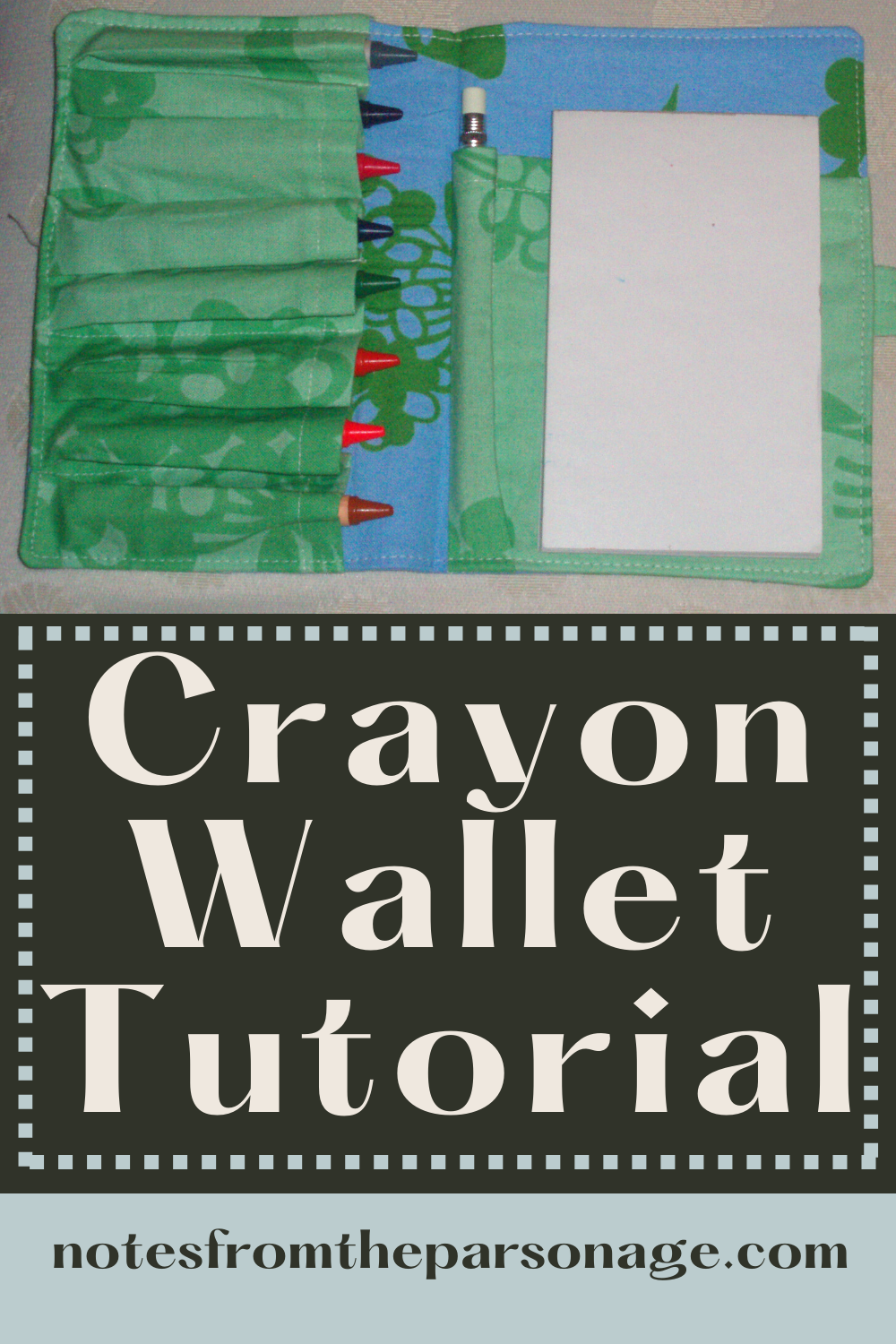
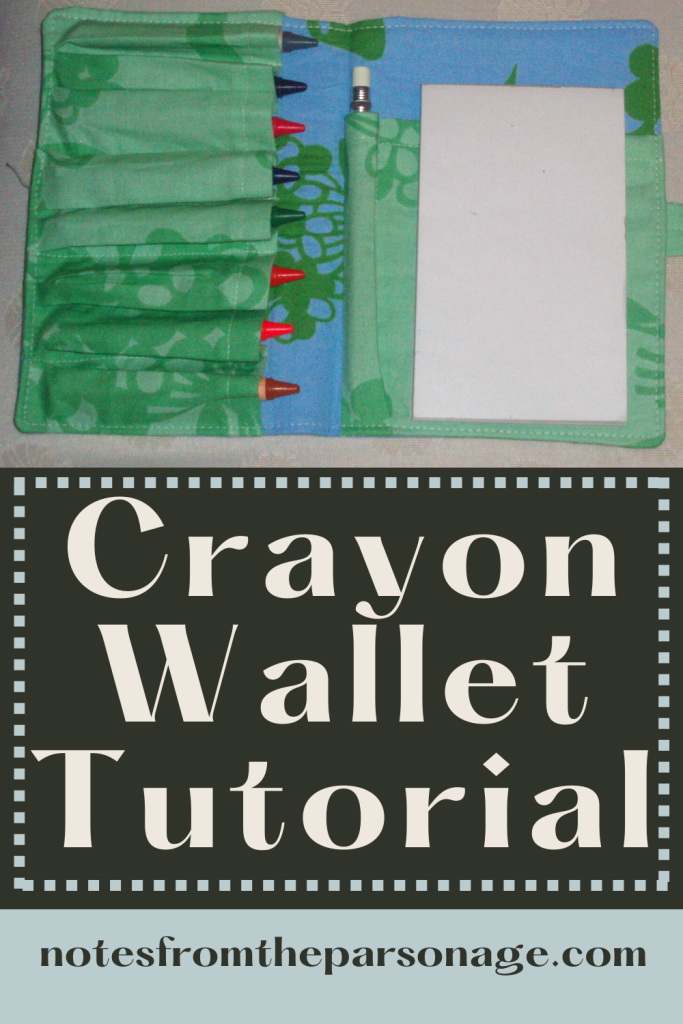
Crayon wallet tutorial with image of inside of finished crayon wallet.

Some time ago, I saw a pattern for a crayon wallet for sale. I stubbornly thought, “There is no way I am paying $7 for a pattern that is certainly just a bunch of rectangles! I can figure this out.” Turns out, I maybe should have bought the pattern. It was more complicated than I imagined. So, here is my tutorial for FREE so you don’t have to endure the same torture of tweaking and changing and making 6 mock-ups like I did! Here is your happy short-cut in the process!

Crayon Wallet Tutorial with image of finished wallet

This tutorial makes a crayon wallet with messy pleats perfect for fat little fingers. It may be confusing the first time through, but once you see what you are attempting to accomplish, you’ll find it much easier the next time. It seems long and complicated, but it really is fairly simple! (With all my tutorials, you can use them as you please- just don’t take credit for the design, because that is just wrong. But sell wallets you make, make them as gifts, whatever!)

First, you need to cut your pieces. You can easily make these from fat quarters! (In fact, you can make two wallets with 2 fat quarters.)

  • Cut one 6″ x 6″ square of your contrast fabric.
  • Cut one 14″ x 5″ rectangle of your contrast fabric.
  • Cut two 10″ x 7″ rectangles of your main fabric.
  • Cut two 10″ x 7″ rectangles of heavy weight fusible interfacing.

(You’ll also want to consider your closure type. You can sew a ponytail elastic in and sew a button on the front to close it. Or you can sew in two ribbons to tie it closed. You can use ribbon or a fabric tab and add snaps to close. For this particular one, I used snaps and a fabric closure.)

Apply the heavy weight interfacing according to the directions on the interfacing. If you are running low on interfacing, you can just interface one of the large, main rectangles (the 10″ x 7″ ones). But for best results, you’ll want to apply interfacing to both 10″ x 7″ rectangles. (And, of course, you are interfacing the wrong side of the fabric!)

If you are adding a snap, you’ll need to mark the front snap placement. The snap should be 3.5″ from the top (of the right 7″ side) and 1″ in. Mark your spot, use awl or pointed object to poke a hole in the fabric at that spot. Using a snap press or snap pliers, apply a snap to the marked spot with the cap of the snap on the interfaced side (will be the inside) and the snapping part on the right side of the fabric. This 10″ x 7″ rectangle will be the outside of your wallet.

Take the other 10″ x 7″ rectangle, and find the center. (Fold in half and press a crease.)

With the 6″ square and 14″ x 5″ rectangle of contrast fabric, make a half inch double fold hem on one edge. (A 14″ edge of the rectangle.) To make a double fold hem, press down 1″. Turn fabric edge under and press 1/2″ under. Seam is now 1/2″. Sew along the edge to finish.

(Picture showing how to turn the edge under.)

(Picture showing both finished edges. The square will be the top of your paper pocket. The large rectangle will be the open edge of your crayon pocket.)

These pockets are the trickiest part of this whole project. It may seem confusing the first time you do it, but it gets easier after that first one. Place your 6″ square pocket face down on your fabric as shown above. Make sure your finished edge is toward what will be the top of your wallet. (Note that in the above picture, it is all upside down since I am sewing the pocket on from the bottom to the top.) Align the pocket so it is about 1/4″ to 1/2″ over the center line. (That crease we pressed earlier.) Sew down the center line, joining the two fabrics. Only sew to the top (the finished edge) of the paper pocket, making sure you backstitch at the top. (If you are confused about placement, keep reading and I think you’ll figure out where this is going.)

I sew a straight stitch down the center. Then, I zig-zag over the raw edge of the pocket- further securing it and making it look neat and tidy.

As you can see in the picture above, the wrong side of the fabric is showing. We’re going to flip the pocket to the right and it will look fabulous! Keep reading.

Flip the pocket over so the right side is now showing. Line up the edge of the pocket with the edge of your main fabric. Sew the pocket down close to the edge. This seam will get covered later, so don’t worry with backstitching or enclosing the edges. Notice, the square pocket is not a perfect fit. Resist the urge to trim it to lay perfectly flat here. The gap is intentional!

Press all the excess toward the center seam. Now, sew (from bottom to top, parallel with the center line) a straight line forming a 1/2″ (you can estimate) mini pocket on the inside of the paper pocket. (This is going to be for a little pencil.) Make sure you backstitch at the top (finished edge) of the pocket.

The little excess now needs to be flipped or pleated away from the center seam, then basted down as close to the bottom edge as possible. (This seam will be hidden later, so don’t fuss with backstitching or edges.) This makes the little pencil pocket pleated, and gives it room so the pencil goes in and comes out easily, making it easy for fat little toddler fingers to both take it out and put it back. We’ll be using the same “technique” with the crayon pockets.

Place the crayon pocket (the 14″ x 5″ rectangle of contrast fabric that you finished a long edge of) and place it right side up along the left edge of your main fabric (opposite the paper/pencil pocket). Place the finished edge toward the center seam. Sew a straight line from the outer edge to the finished edge in the middle of the pocket to the middle of the main fabric. (see above picture) You don’t have to measure for exact centers, unless you’re obsessive like that. The messy pleating takes care of any small discrepancies in measurement. Make sure you backstitch at the finished edge. (I know this is probably a confusing process the first time through. Once you finish one and see what you are trying to accomplish, you’ll find it simple the next time around.)

(Picture of the finished center seam of the crayon pocket.)

Line up the edges of the crayon pocket. Note, the excess fabric is intentional. You’ll need it. Sew close to the edge, securing the edges of the pocket. Note that this seam will be hidden later, so there is no need to backstitch or finish the edges of this seam. Just stay as close to the edge as possible while sewing. Do the same with the other side.

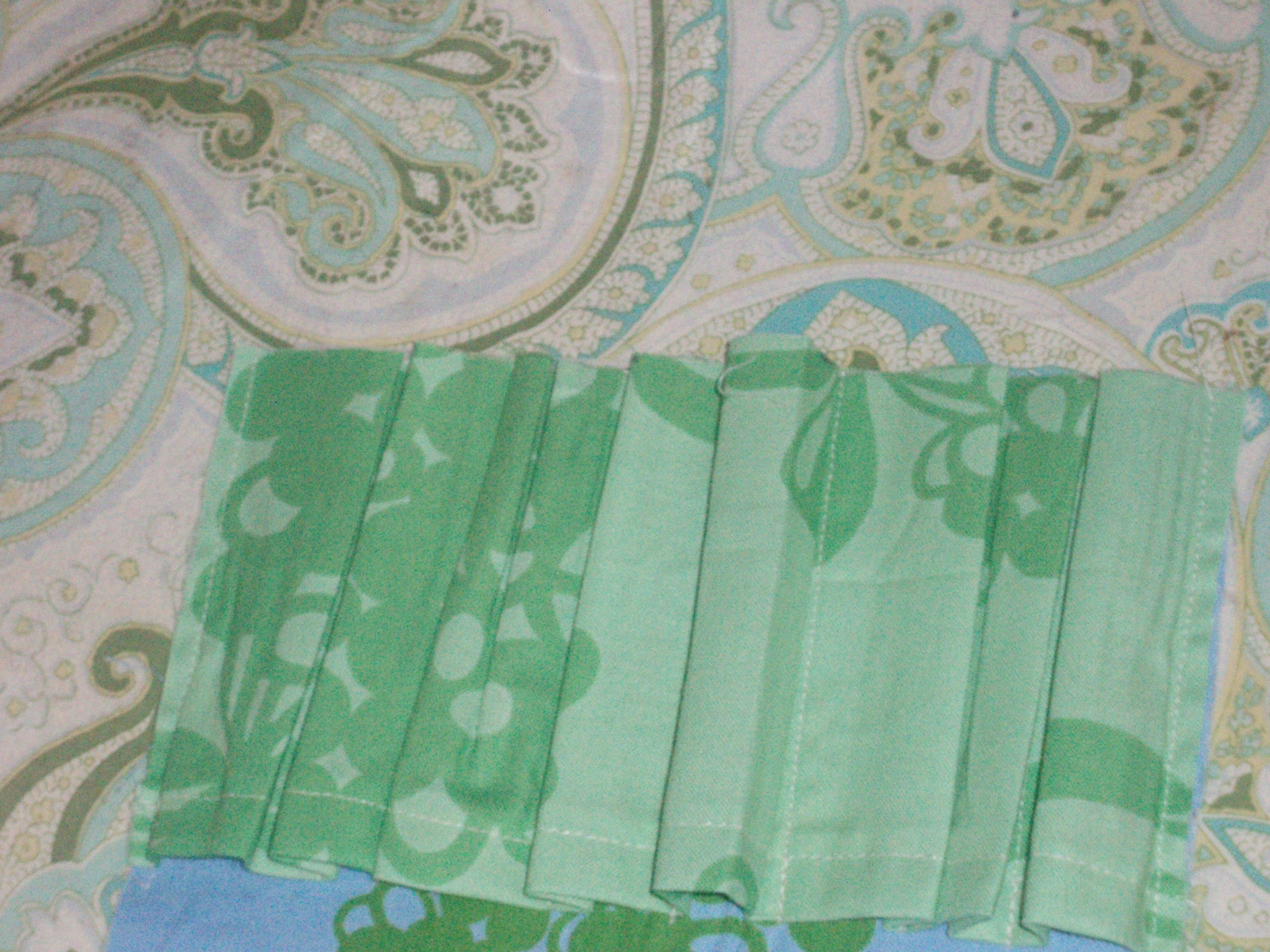
Now your crayon pocket will look like this! See all that “extra” fabric just hanging around? Let’s keep going and make this thing look like something you might use.

Now, you’re going to take it from half to fourths. Eyeball about halfway between the center seam and the edge, pushing the fabric equally toward the center seam and edge seam. If you’re super obsessive, you can measure, but it won’t matter. And if you’re not quite sure, always err toward the center, since the edge will have more removed by seam allowances later. Sew from the outer edge to the finished edge, backstitching at the finished edge. Repeat on the other side!

Now your crayon pocket is looking like this. Fun, no? Reminds me of two seagulls holding hands or golden arches side by side or… okay, let’s just move one.

Now, we’re going to halve our fourths, creating eighths! Oh, fun with fractions! Stitch a seam halfway between each forth, pushing the excess fabric equally in opposite directions. Remember to backstitch at the finished edge. (This edge will take a lot of wear from little ones getting crayons in and out of the pocket, so make sure they are secure! Think of their sad little faces when they bust a seam trying to get their pudgy little fingers all the way down in that little pocket. Now, make sure that doesn’t happen!) Continue between each forth (erring toward the center seam, if necessary), making 8 little lumps.

Your creation should now look something like this. Now, we get to messy pleats!!!

Take your iron, and just press those little lumps in any direction they want to go. The only consideration you must take when making these messy pleats, is in making sure the edge pleats go toward the center and NOT toward the outer seams. (You don’t want to take away fabric when you finish your seams.)

(A close-up picture of the messy pleats. Note that you can see both the right and left seam edge! The pleats are NOT covering the outer seams.)

Sew (baste) the outer edge of the fabric, securing the pleats. Make sure you stitch as close to the edge as you can.

Pin closure in place on the interior. Pin it 3.5″ down the side. (That would be the halfway point.) For this wallet, I made a cloth tab. (It is long in the picture. I cut it down and finished the edge after sewing everything up.) You can place a ponytail elastic here and sew a button to the front when you are done to close your wallet. You can sew in a ribbon on each side to tie up your wallet. The details are up to you!

Place your two main fabrics, right sides together. Notice that the snap is to the left. If you’re using snaps, you’ll need to keep in mind which way these go, or you’ll end up with snaps in unusable places.

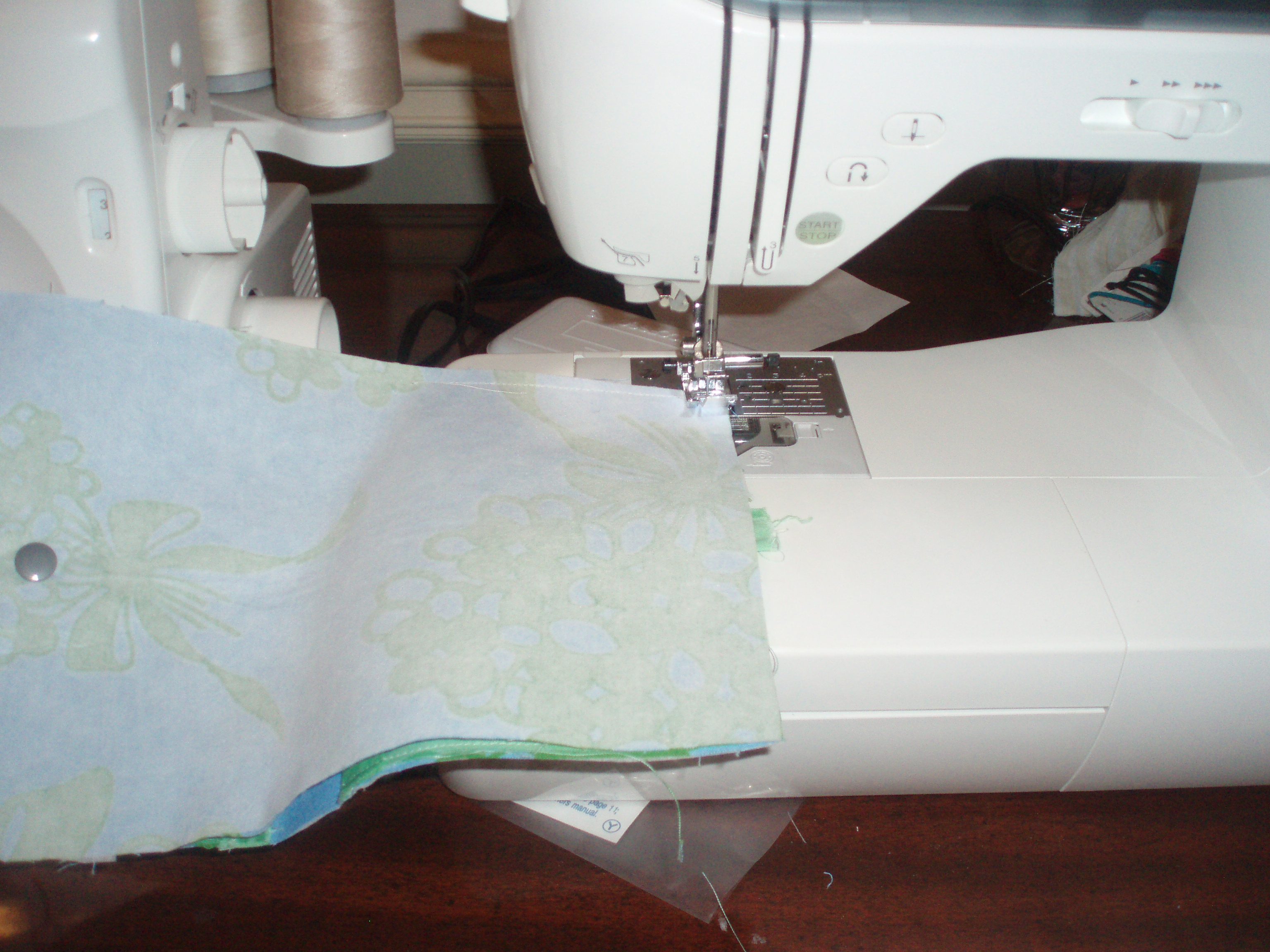
Sew around the edges, using a 1/4″ seam allowance. In the corners, leave your needle down, lift the foot, rotate your work, and continue sewing. Leave a small hole to turn. (I make sure mine is at the top, about the paper/pencil pocket. I don’t like leaving a hole where the pockets are joined.

(A picture of the hole I left.) Clip your corners, so they’ll end up being corners and not large bumps.

Turn your crayon wallet right side out. (I purposefully chose this photo, because people rarely take pictures of those ugly or scary moments in a project when you wonder if you are doing this “correctly.” Turning things right side out is always a scary moment for me because I wonder if the whole thing is going to rip to pieces or, worse, if I have done the whole thing wrong and will find out momentarily that I put something on upside down or something dumb.)

Push out your corners, straighten your work. Press your wallet. Admire it. Smile at realizing you are so very close to being done with this!

Topstitch as close to the edge as you can while maintaining control of your machine! I always start just before the hole to make sure it gets closed up nicely. Make sure the raw edges of the hole are tucked in nicely (and evenly) before you start topstitching. Topstitch around the entire wallet, overlapping about 1/2″ when you come back to where you began. (Leave your needle down when you reach a corner, lift the foot of your machine, turn, put the foot back down, and keep sewing.)

Finish any closure details you need to. In this case, I had to sew up the end of the fabric strip and add a snap closure. (The finishing looks terrible. I should have finished the inside of this edge differently, but whatever. It snaps dang it!)

Here it is all closed up! (I was not entirely pleased with the way this particular wallet turned out. In fact, I won’t be selling this one, since it is well below my personal standards. But you get the picture. What went wrong? I was too concerned with taking nice pictures to properly press and perfect the topstitching, for one. I was too concerned with pictures to make a proper cloth closing tab. But hey, at least I got plenty of pictures, right?!)

And another look at the finished interior. Fill the crayon pockets with 8 crayons.  Put a small pencil (I use Zebra brand mechanical pencils) in the pencil pocket. Place a 3.5″ x 5″ pad of paper in the paper pocket. (Just place the cardboard back in the pocket, leaving the paper available for coloring.) The messy pleats make it really easy for toddlers to get their crayons in and out of the wallet- giving them a good lesson in keeping their own things neat. (I was shocked when my 2 year old, who never puts anything away, sat and put every crayon back in its place before reaching for another.) You can feel free to use, change, or laugh at my design in any way you wish. Happy crafting!

OTHER NOTES FROM THE PARSONAGE POSTS YOU MIGHT ENJOY

  • Double Ruffle Pants Tutorial
  • Tiered Pants Sewing Tutorial
  • Petal Skirt Tutorial
  • Wide Leg Ruffle Pants Tutorial

Filed Under: Crafts Tagged With: crafting, crafting for kids, crayon wallet, crayon wallet tutorial, DIY, free sewing patterns, free sewing tutorial, free tutorials, gifts for kids, how to make a crayon wallet, how to sew, how to sewing, make it yourself, make this, Sew, sewing, sewing tutorial

ESV Artist Series Study Bible Review

March 30, 2024 by notesfromtheparsonage Leave a Comment

Have you seen the new ESV Study Bible with Artist Series Cover by Jessica Dennis Bush? Let’s jump right into the beautiful pictures and features!

Slipcover of the ESV Study Bible Artist Series by Jessica Dennis Bush on wooden table.

Crossway sent me this beautiful Study Bible to review. It was perfect timing because our oldest daughter, Imogene, has been taking college classes and wanted a good study Bible to use for class. This Bible has all the study notes she needs and the cover is unique and artistic.

Cover of the ESV Artist Series Study Bible with blue, pink, and tan decorative hardcover on a wooden table.

Study Bible Exterior Features

We’ll start with the exterior features of this study Bible. The cover is has this art print titled “Interlude”. It is a fabric over clothboard cover. The cover is quite lovely and has a little bit of a unique personality from a typical floral Bible cover.

You can get this study Bible with different covers. There is the simple hardcover, imitation leather, chestnut imitation leather, or bonded leather just to name a few.

It also has two ribbon markers in a dark brown color. While I think four is the perfect number of ribbon markers, I can be happy with two in this Bible.

Close up of full color Bible map under Bible notes in the ESV Study Bible.

This study Bible has all the notes! It has lengthy book introductions and outlines. It has extensive notes. And it has full color maps and diagrams along with the text and a few on glossy cardstock paper in the back. This Bible is made for study!

View of Bible page that reads "Concordance"

The ESV Study Bible also has quite a lengthy concordance in the back. It comes in pretty hand when you’re doing more of a topical study than a book study. While not as exhaustive as a separate concordance, this one keeps everything all in one place for you. This will be super helpful to Imogene in her dorm, since she won’t have quite the extensive Bible study library we have at the house.

Picture of full color glossy map in the back of the ESV Study Bible.

Overall Impression of the ESV Artist Series Study Bible

Picture of the ESV Study Bible, a lit white candle, and the Jessica Dennis Bush artist card on a wooden table.

This is the perfect Bible for in depth Bible study on the go! It has everything you need to do a pretty good job of studying the Bible without needing a full library of helps. The cover is beautiful and unique. It is quite hefty in size, so it wouldn’t fit well into a small purse or bag– but it’ll fit a school bag just fine. I feel like this is the perfect Bible for a college student. It does not have room for taking notes, but it does have all the study features you want.

Pinterest image with ESV Study Bible Artist Series Review written around the picture of the Bible on a wooden table.
xr:d:DAGBk5XcUi4:3,j:1522640619651443904,t:24040519

** This post contains affiliate links. Affiliate links support your favorite content providers without costing you any extra money.**

** This Bible was sent to me by Crossway for review. I am not obligated to give it a favorable review. All opinions are my own.**

Other Notes from the Parsonage Posts You Might Like:

  • ESV Journaling Study Bible Review
  • ESV Student Study Bible Review
  • ESV Personal Study Bible Review
  • Bible Tabs
  • Word Before World

Filed Under: Bible Reviews, Faith Tagged With: Bible, bible review, study bible, study bible review

DIY Burp Cloths- Two Sizes

March 28, 2024 by notesfromtheparsonage 2 Comments

Make DIY Burp Cloths in 2 Sizes

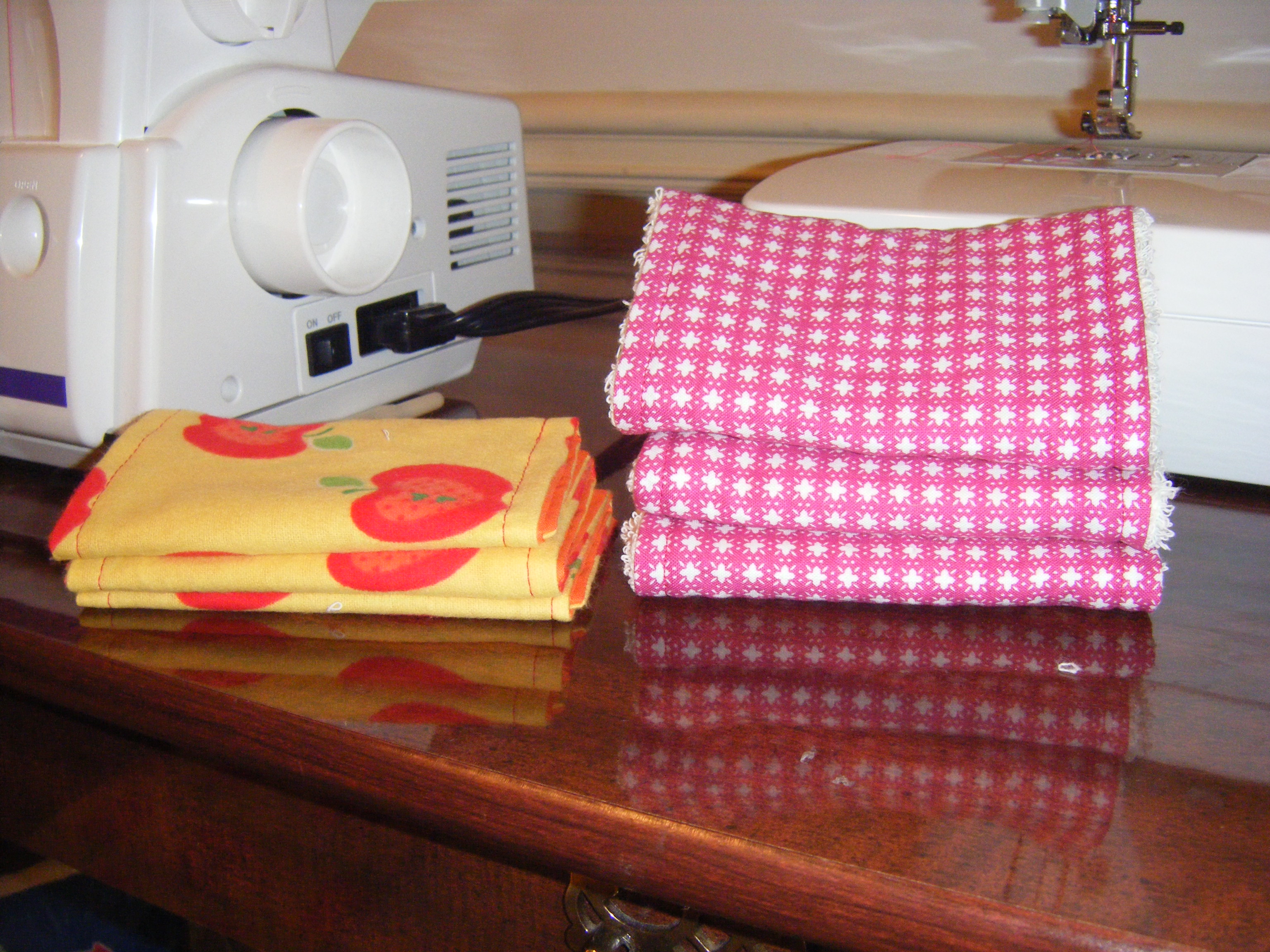
This sewing tutorial will teach you to make DIY burp cloths in two sizes- a standard size and a mini size. The standard size are the typical burp cloth, only these will be the best burp cloths you’ve ever used! The mini size is sized to fit into a wipe warmer to have warm wet cloth wipes on hand or it is perfect to put in the diaper bag for wiping little noses and taking care of small messes.

Now, how do you make them?

Dimensions of DIY Burp Cloths

Standard Size- 10″ x 18″

Mini Size\- 10″ x 6″

A standard size DIY burp cloth next to a mini size DIY burp cloth

The mini is a third of the size as the standard.

The Basics of DIY Burp Cloths

Orange fabric pressed and ready to cut.

To make either size DIY burp cloth, simply cut two rectangles of fabric (we’ll discuss fabric selection in a minute) and sew them together with right sides together, leaving a hole to turn the item right side out.

DIY Burp cloth sewn with wrong sides together with a small hole left to flip right side out. Corners are snipped so they'll be sharp when they're turned.

(You can see the hole in the above photo on the upper edge.) Clip the corners so when you turn your item right side out, you’ll have corners rather than rounds.

Flip right side out, pushing the corners out. Sew around the edge again, all the way around. Sew close to the edge to close the hole. Overlap your stitches where you began.

(This entire process is very simply termed “turned and topstitched” or “T&T.” When you see this, you know the whole process is sew, flip, sew.)

Close up of turned and topstitched edge

Fabric Choice for DIY Burp Cloths

Now, let’s discuss the arduous task of choosing fabric! So, you can clearly use whatever you want, but I have tried several things and used them personally, so I really do know what works.

Woven Cotton with Terry Cloth

The best option based on absorbency is woven cotton on one side (quilting cotton) and terry cloth on the other side. You can buy the terry cloth by the yard, but the best absorbency is to buy cheap towels from the mega mart which shall remain unnamed. You go to MegaloMart and buy their cheapest towels. Cut the end strips off (unless you like that line across your DOY burp cloth) and cut them into appropriate sized rectangles. I have tried both terry by the yard and cheap towels and I can tell you that cheap towels make fluffier, more absorbent burp cloths. (And you’ll have a broader range of colors.) Burp Cloths made out of cotton and terry are cute and functional. They catch the biggest messes from the biggest spitters! They are awesome! The drawback is the bulk. They are pretty hefty and don’t fold up very small, which makes them boogers to stick a few in your diaper bag. There are also limited colors available. Yes, towels come in many colors, but you may have trouble finding exact matches.

Two DIY Burp cloths on top of each other

Flannel Options

The next best option is flannel. You can use a woven cotton (quilting cotton) on one side and flannel on the other, or you can do both sides in flannel. Flannel is soft, thin, and absorbent. The flannel/flannel make awesome wipes in the mini size! (Flannel/bamboo velour make some super awesome wipes in the mini size- but that can be expensive!) Solid flannel comes in more colors that terry and even more than towels. Cotton/flannel burp cloths are perfect for stashing several in your diaper bag for emergency use. They also work well if you have a frequent spitter that doesn’t spit a lot each time. They fold down so easily. You can also use flannel on one side and terry on the other side, if you are so inclined. Flannel is much softer than the terry.  Flannel is also really cheap!

Folded up DIY burp cloths showing the difference in thickness when using Terry cloth vs. using flannel.

Cotton Knits

You can also use a cotton knit in place of woven cotton. I tend to use woven cotton because it comes in so many prints and patterns. I can find so many cute fabrics. Knit on one side and terry on the other do make some awesome wipes in the mini size, though they can be a little rough (especially on little noses), but can clean poo off little butts like nobody’s business. You can also use knit on both sides, but they are hard to sew and are not my favorite. But if you have some old tees and need wipes, go ahead and use them to make a bunch of the mini size! (If you have a serger, you can just serge two layers of knits together instead of T&T.)

Woven Cotton with Chenille

I think chenille on one side and woven cotton on the other is the most beautiful and functional version of the DIY burp cloth. However, chenille is way more expensive than I want it to be. But to make a baby gift just that little bit *extra special* I will splurge because they are spectacular.

Rolled up DIY burp cloths showing the difference in thickness in Terry vs. flannel.

Bad Fabric Choices for Burp Cloths

You can use whatever you like, but there are a few things that I thought might be nice, but really suck when made into something you need to actually function!

Minky Fabrics

Don’t use minky. It sounds like a nice idea- a diy burp cloth with cotton on one side in an adorable pattern and super soft minky on the other. Well, it is gross when a kid pukes on the minky and it isn’t absorbed at all! It just sits there and you touch it and it is cold, then the baby rubs his face in it and he has puke all over his cute little face because minky does not absorb! Yes, the diy burp cloth is cute as can be. Yes, before the baby is born you run your hand over it and feel the softness and you get all mommy-eyed thinking about your soft, sweet baby cuddling up on your shoulder with this divine burp cloth you made. Then you use it once, have puke smeared everywhere on you and adorable baby, and you never pick that burp cloth again. Until your mother-in-law visits. *laughing* (That was a joke. I am not at all responsible for mothers-in-law getting covered in icky baby puke from a non-absorbent burp cloth!)
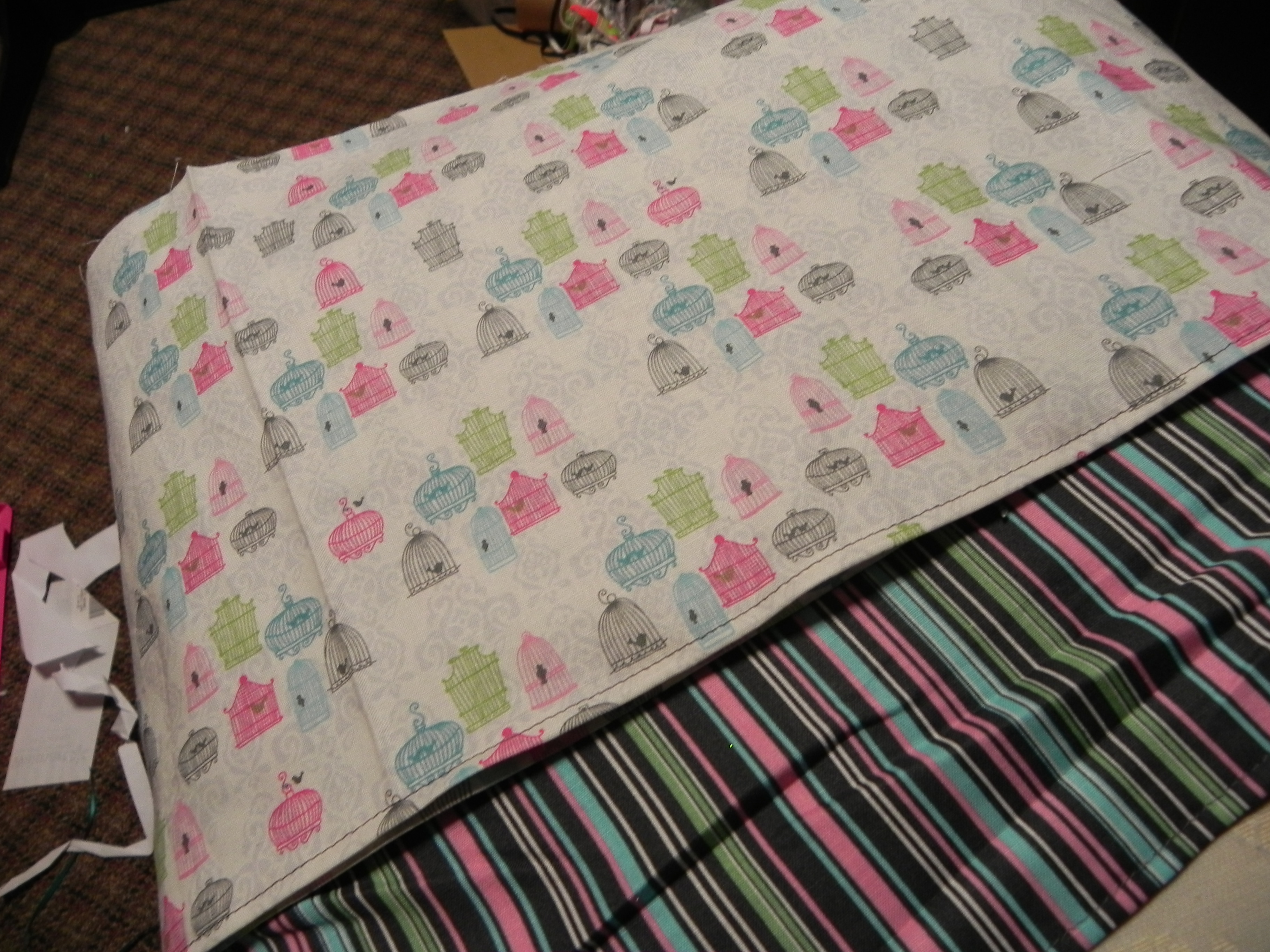
Fleece

The next fabric not to use is fleece. It seems like it’d be a nice choice. Many baby things are fleece. Fleece is soft and fluffy. Fleece comes in bazillions of colors. But let me inform you, fleece repels water. That is not a good feature for a burp cloth. (If you need liners for cloth diapers to keep diaper rash cream, bacitracin, or petroleum jelly off your diapers, fleece makes a good liner. Other than that, keep away from the fleece!)

Two stacks of diy burp cloths showing the difference between the thickness of Terry cloth vs. flannel.

So, go sew! Go ahead! Make DIY burp cloths in all the sizes for yourself, your friends, your neighbors, that person across the country that you don’t know but paid you to do so!

DIY Burp Cloth in 2 Sizes with pictures of two stacks of burp cloths

Other Notes from the Parsonage Posts You Might Enjoy

  • Doubly Twirly Skirt Sewing Tutorial
  • Plastic Bag Holder Tutorial
  • Crayon Wallet Tutorial
  • Superhero Cape Sewing Tutorial
  • Cowboy Bib Sewing Tutorial
  • Half Yard Baby Shower Gift

Filed Under: Crafts Tagged With: burp cloth, burpie, cloth diapering, cloth wipes, etsy, free sewing tutorial, how to, Moose and Wormy, sewing, sewing tutorial, turn and topstich, wipie

  • « Go to Previous Page
  • Page 1
  • Page 2
  • Page 3
  • Page 4
  • Interim pages omitted …
  • Page 12
  • Go to Next Page »

Primary Sidebar

Hello there!

black and white image of lady with long dark hair and glasses next to window with bamboo window shade

I’m Lindsey Jane, wife of a pastor and mama of 9 (yep, 9). Read along as I write about faith and family!  You can read more about our family and me here.

Try Audible Plus Today!

Listen to my recommended book this month with an Audible subscription today! (Use these links to support this website!)

NLT Thinline Reference Bible Review

The Pastor decided he wanted to read the New Living Translation of the Bible this year. This is a “thought for thought” translation, which differs from the English Standard Version he usually reads, which is more “word for word”. I have accidentally created a Bible snob, so when he said he needed a physical copy…

Read More

Books I’m Reading in 2026

I’ve put together my reading list for 2026. I’m not going to share every single book, but you can always follow me on Goodreads if you want updates on all of it. I’m going to admit, I’ve chosen more books than I think I can read– but onward we go anyway! Non-Fiction Reading for 2026…

Read More

Books You Should Consider Reading in 2026

It is that time of year that we make a list of the books we want to read in the coming year. What should make your list in 2026? I have a few suggestions for you to consider. Non-Fiction Books to Read in 2026 No More Boring Bible Study by Faith Womack I read this…

Read More

Moment By Moment

Pinterest image of title of this blog, moment by moment, on blue background above an image of stained glass showing a pillar of cloud and fire

Let me set the scene, the Israelites (possibly numbering more than 2 million at this point in time) have been driven from Egypt after the ten plagues and they’ve entered the wilderness and have no idea where they are going. God knows the weakness of the people, so He is taking them the long way…

Read More

Copyright © 2026 Notes From the Parsonage on the Foodie Pro Theme